.svg)
View all resources
Journalistic impact
A case study on how The Villager overcame “paralysis” to find its first 150 readers.
November 20, 2025
Lorem ipsum dolor sit amet, consectetur adipiscing elit. Suspendisse varius enim in eros elementum tristique. Duis cursus, mi quis viverra ornare, eros dolor interdum nulla, ut commodo diam libero vitae erat. Aenean faucibus nibh et justo cursus id rutrum lorem imperdiet. Nunc ut sem vitae risus tristique posuere.

When Katie Campbell, editor-in-chief of The Villager at Stevenson University, was invited by a former editor to a newsletter bootcamp, she had no plans to actually start one. But just two sessions into the Flytedesk camp, she had a realization. For her small staff at a private university, a newsletter was the most “practical thing available.”
Why? It was something they could do that didn’t “need money… a bunch of people and a bunch of resources,” Campbell said. They could use a free platform like Mailchimp and publish monthly to begin with. Shortly after, the Villager Voice was born.
For Flytedesk, the push for newsletters boils down to one core concept: owning your distribution channels. Anytime a website host or a social media platform goes down, “you’d lose your means of communicating with your audience,” said Micah Ernest, a publisher development manager at Flytedesk. An email list, he explained, is a permanent asset that the publication controls.
Beyond ownership, newsletters are practical, fitting into a student’s routine as they regularly check emails for important school updates. This strategy directly solved a problem for The Villager. Campbell wanted to reach students who weren’t actively seeking out the student news organization’s website or social media. They wanted to get into everyone’s inboxes and to reach the wider Stevenson community. The value was proven almost immediately. Campbell’s team found that the story placed at the top of their first newsletter has the highest monthly views on the website. For many student newspapers, the gap between a big idea and execution is a huge challenge. But Campbell’s team succeeded. This is how they went from zero subscribers to 150 by launching day, using a simple strategy: a bake sale.
The Villager was among 15 student newspapers that took part in Flytedesk’s first-ever newsletter bootcamp, an extensive 16-week program to support student media organizations that wanted to build or improve their newsletter product. The program entailed several webinars covering topics like increasing engagement rates, growing your list size, and monetizing a newsletter; all program participants were invited to the webinars, and also had regular check-ins with a dedicated coach.

The biggest challenge wasn’t the technology, the content, or even the subscriber list. It was the “mental block” of starting — a common struggle student journalists face when trying to start a new project.
“One thing I get paralyzed by is looking at a whole big project,” said Ernest, who was also the former Villager editor-in-chief who invited Stevenson’s team to the bootcamp.
His single biggest piece of advice is to break different tasks down into smaller, manageable, actionable chunks. Campbell put that advice into practice. Instead of thinking “I have to launch the newsletter by this date,” she separated the process, deciding to tackle the subscriber list first, without even worrying about the newsletter’s design and content.
“I just thought about: ‘we have to make a list of emails,’” Campbell explained. “It was very simple from there because you’re just focusing on one task.” For other student news organizations feeling “paralyzed,” her No. 1 actionable tip is even simpler: “Literally just making an account in Mailchimp or a platform.”
With the mental hurdle cleared, the next was practical: The Villager had no email list.
As a private school, Stevenson wouldn’t provide a student email list via a public record request. Professors also declined to share their class lists.
“But all the professors wanted me to send them the newsletter and they would send it out to their students,” Campbell said. “But that’s not what we want to do because we want to be able to see who our audience is.” Then Campbell thought of a clever way. Because The Villager is usually successful with its fundraising bake sale, making about $200 to $300 last year, she thought this approach would still work.
“The best way to do that, we thought, was to bribe them,” she said. “So we bribed them with food.” The team held a bake sale, but instead of charging money for cookies and brownies, they charged an email address. They got about 150 emails. Ernest, the Flytedesk coach, loved the manual tactic. He said it’s a perfect strategy for schools without list access because it also makes the publication more visible on campus and allows for face-to-face engagement with the audience.
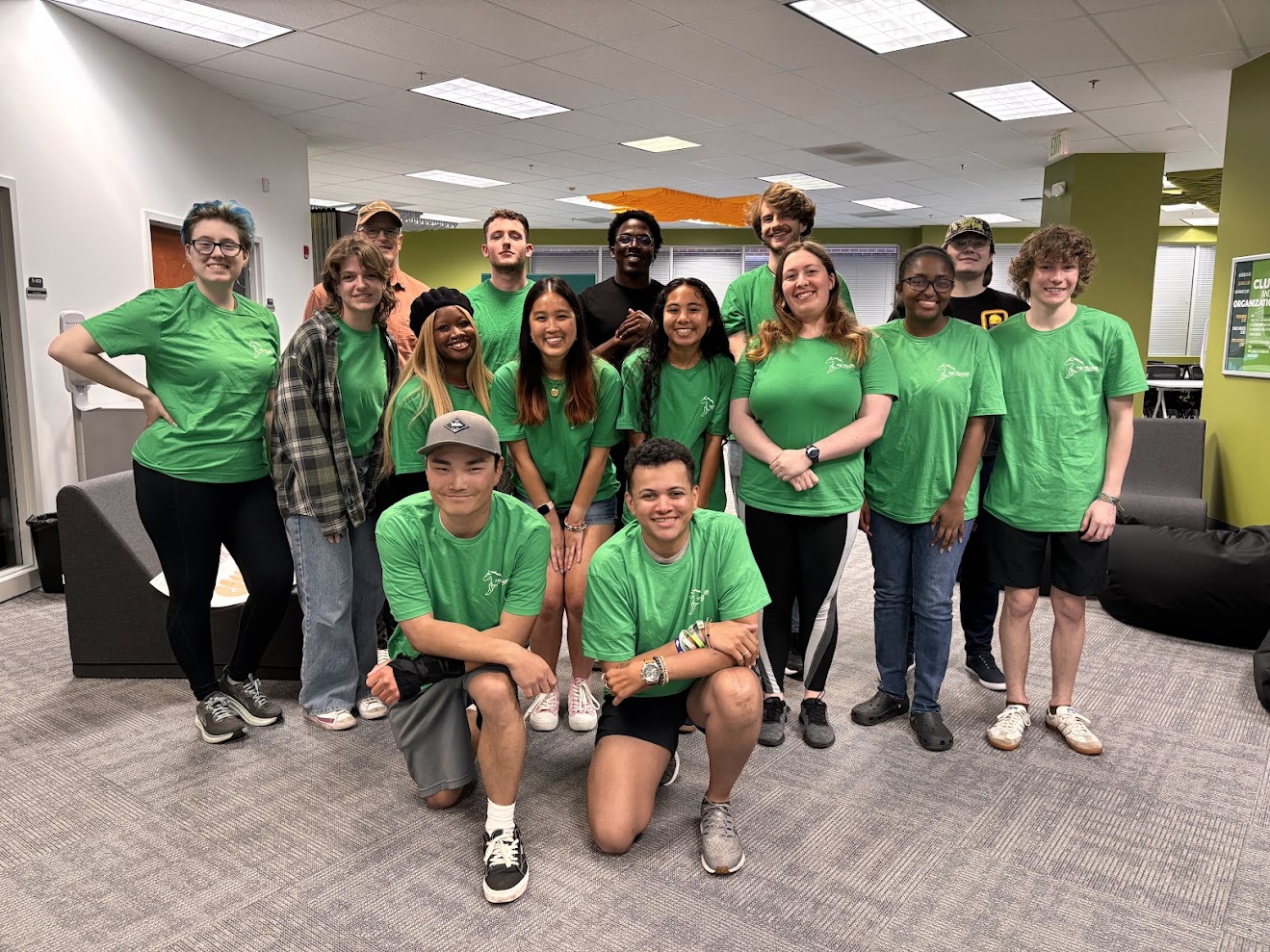
With a subscriber list and a Mailchimp account, The Villager team built the launch strategy with guidance from their bootcamp coaches.
The team couldn’t check their click rate, as that feature is behind Mailchimp’s paywall. But they found another way to measure success.
“We looked at our analytics for just the website in general and we realized that the story that… we put at the beginning (top of the newsletter)… it has the most views from the whole month,” Campbell said. “So, at least we know it’s working.”
The launch wasn’t without problems. A major, still-unresolved issue is that the university’s Outlook emails send the newsletter to the spam folder, blocking the newsletter’s images, requiring a “trust sender” click that “a student isn’t going to do,” Campbell said. But the team has a clear path forward. Campbell’s short-term goal is to grow the list to 200 subscribers. Her long-term goal: transitioning the Villager Voice from a monthly to a weekly newsletter before she graduates.

On this page
Headings

Our team can help you apply these insights, explore additional resources, or workshop strategies for your campus media.
.png)

%202.svg)