.svg)
View all articles
Comparisons
Our team analyzed college advertising campaigns, ranking the top 8 that demonstrated measurable impact on students.
Lorem ipsum dolor sit amet, consectetur adipiscing elit. Suspendisse varius enim in eros elementum tristique. Duis cursus, mi quis viverra ornare, eros dolor interdum nulla, ut commodo diam libero vitae erat. Aenean faucibus nibh et justo cursus id rutrum lorem imperdiet. Nunc ut sem vitae risus tristique posuere.
.webp)
Between January and March 2026, our research team analyzed college advertising campaigns across North American campuses. We evaluated each campaign using a weighted scoring framework that measures effectiveness across five core performance dimensions and one qualitative specialty factor.
Our analysis focused on campaigns that demonstrated measurable impact on student awareness, engagement, and conversion behaviors. The scoring methodology weights factors as follows:
• Campaign reach (35%) – Number of campuses and students exposed
• Engagement rate (25%) – Active participation and interaction levels
• Conversion impact (25%) – Measurable behavior change or sales outcomes
• Measurability (15%) – Data collection rigor and attribution clarity
• Campaign focus – Primary strategy or defining execution approach
Based on this framework, we rank-ordered the campaigns and identified the top performers. The table below highlights the seven highest-scoring college advertising campaigns from our dataset, followed by detailed reviews of each program.
In the table below, we break down how the top campaigns performed across our core evaluation criteria.
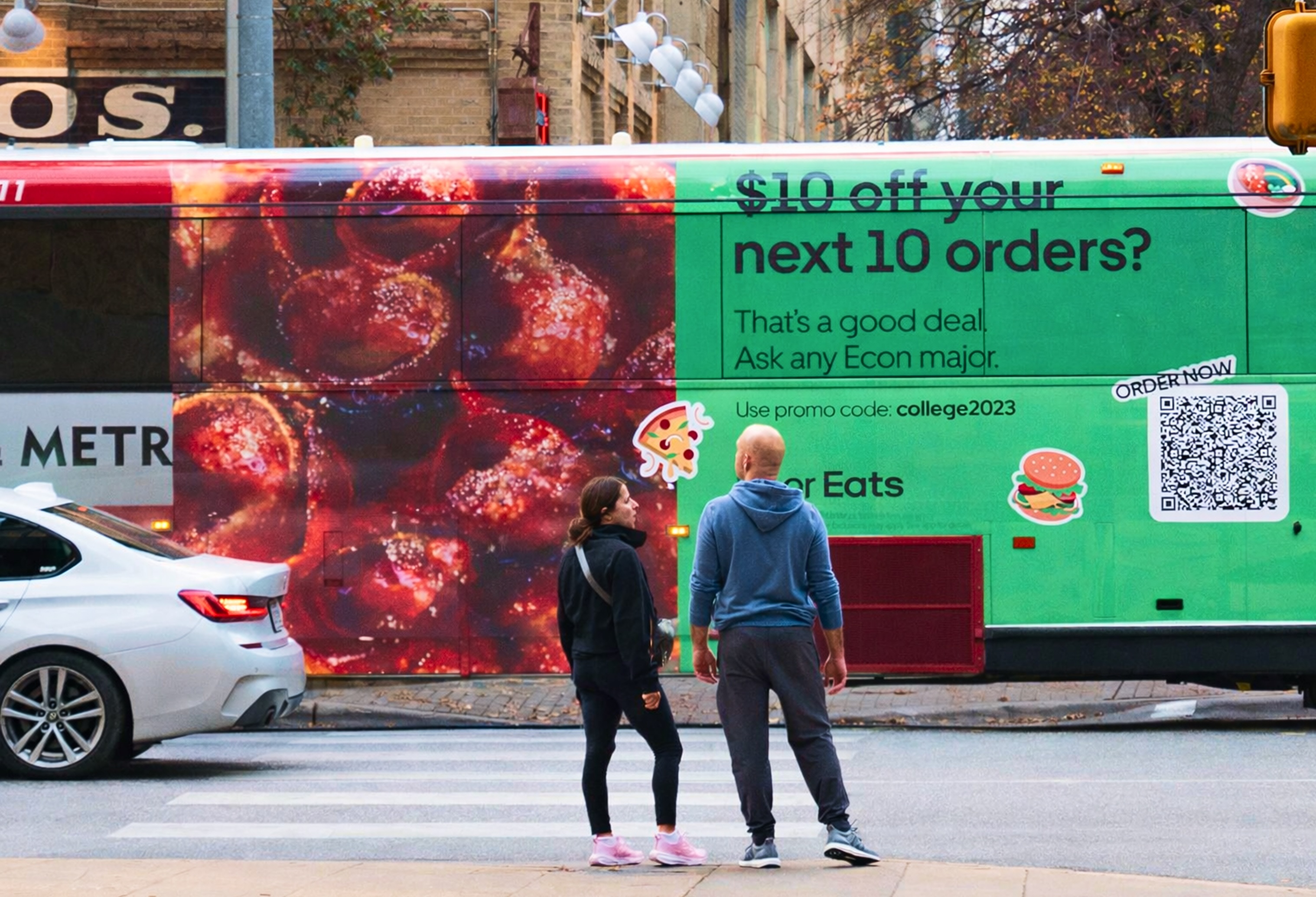
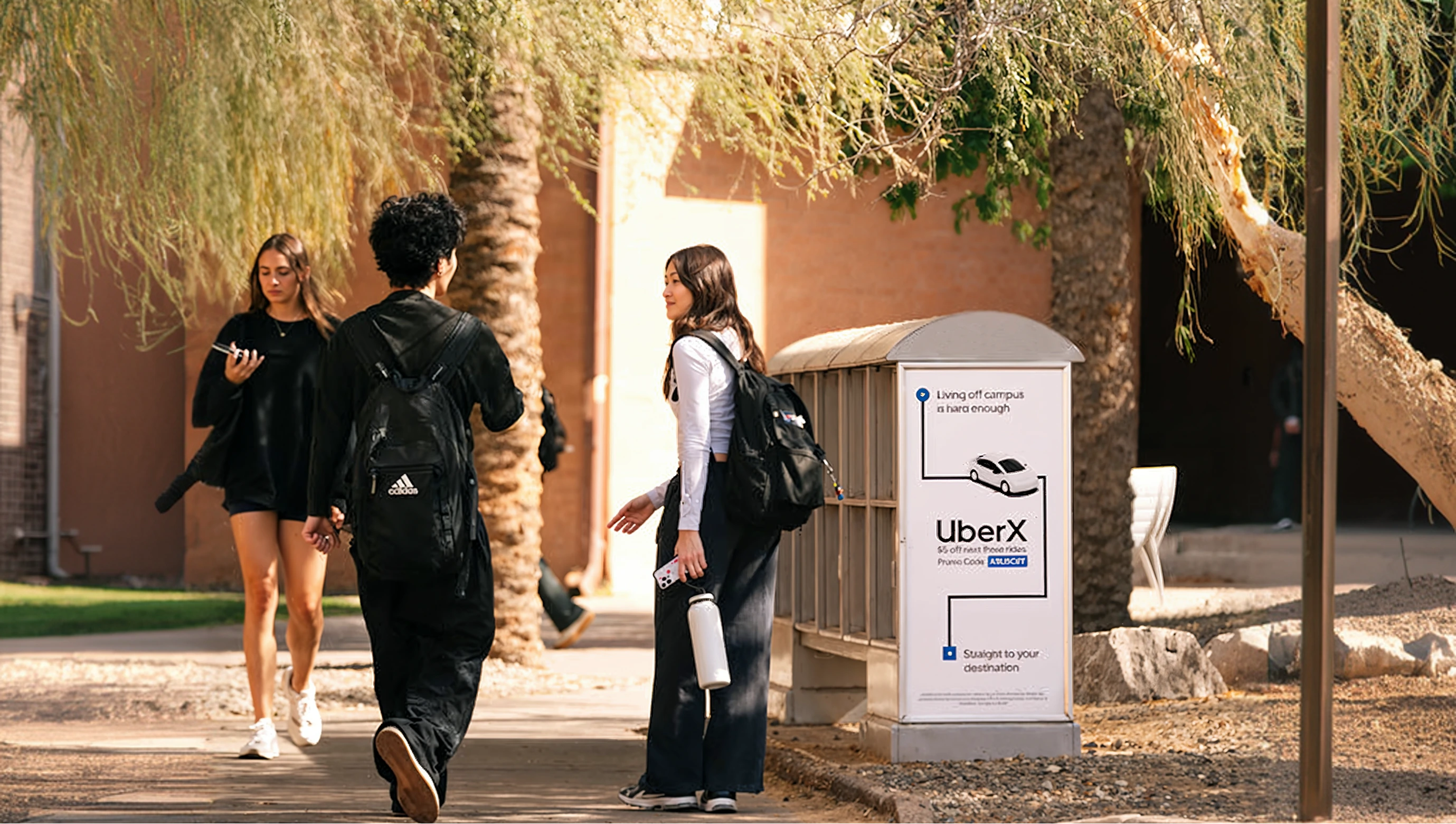
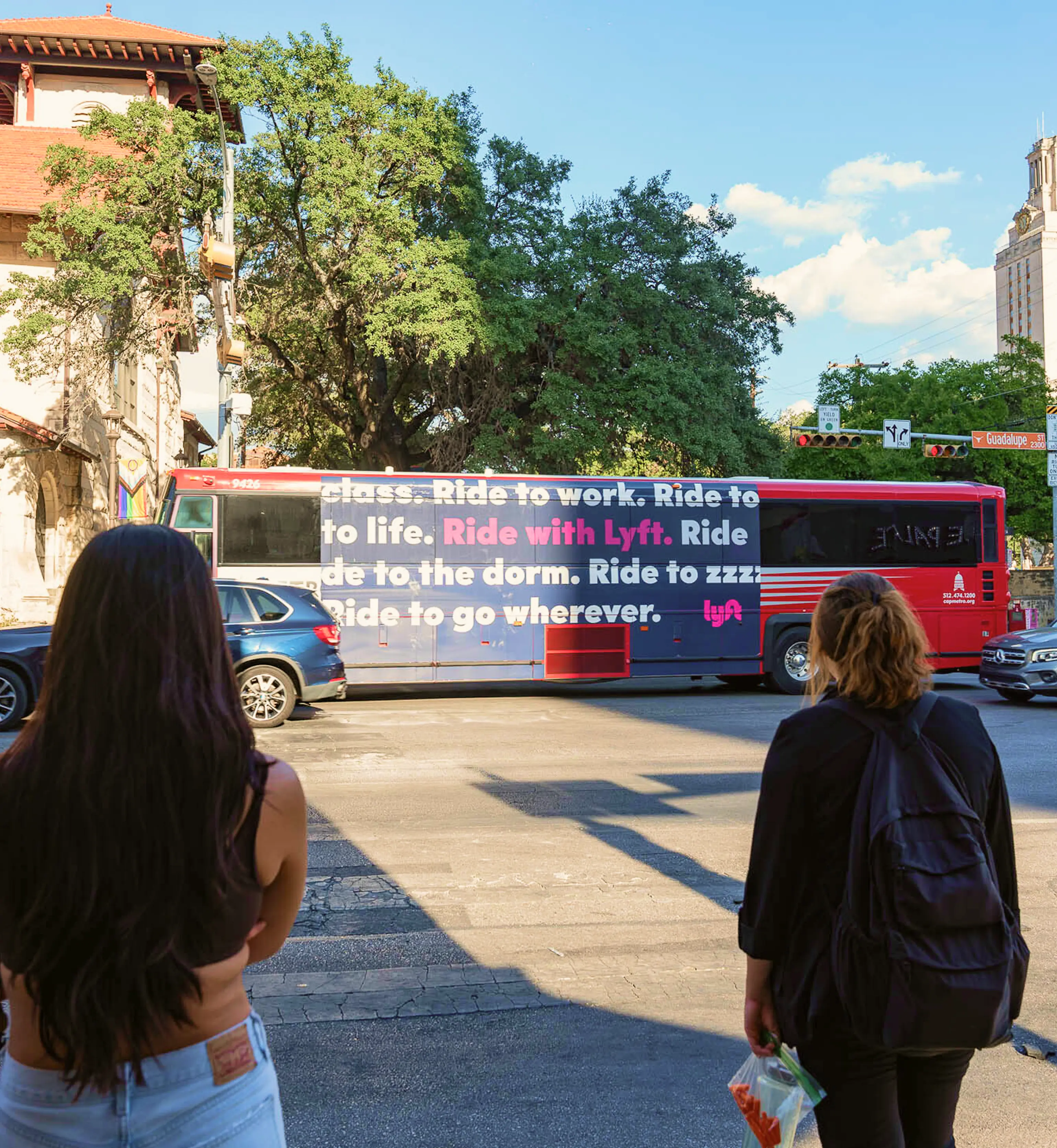
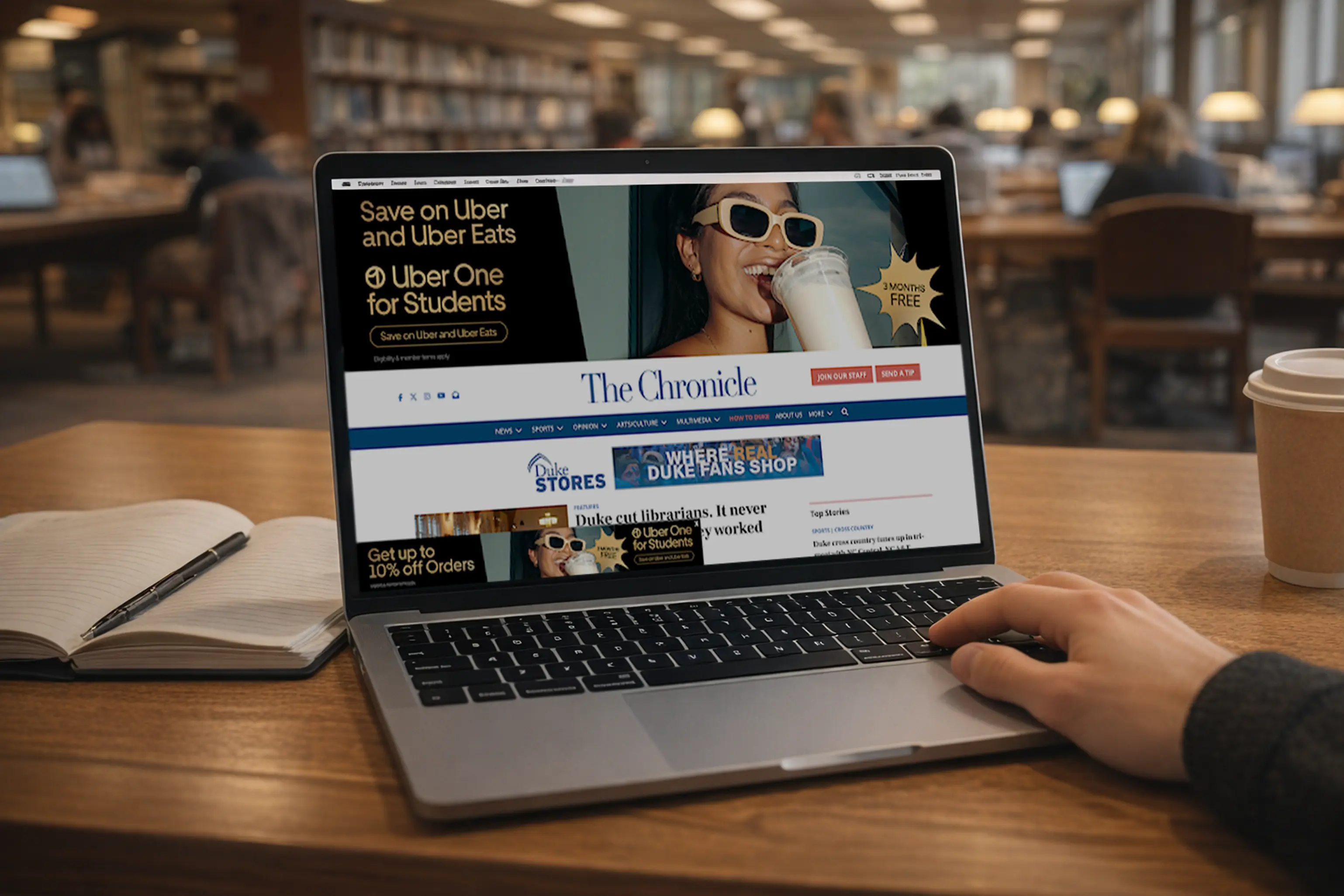
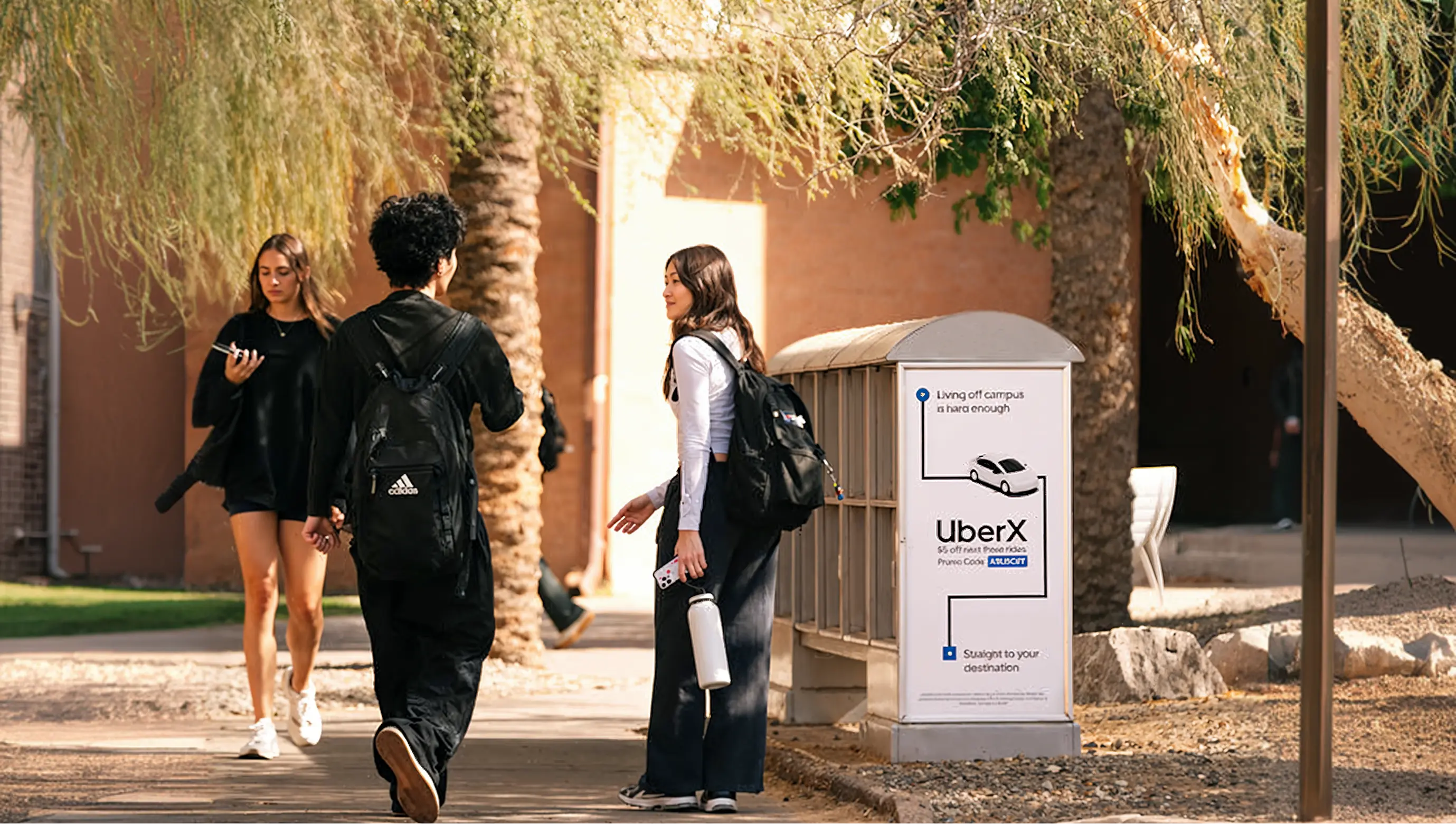
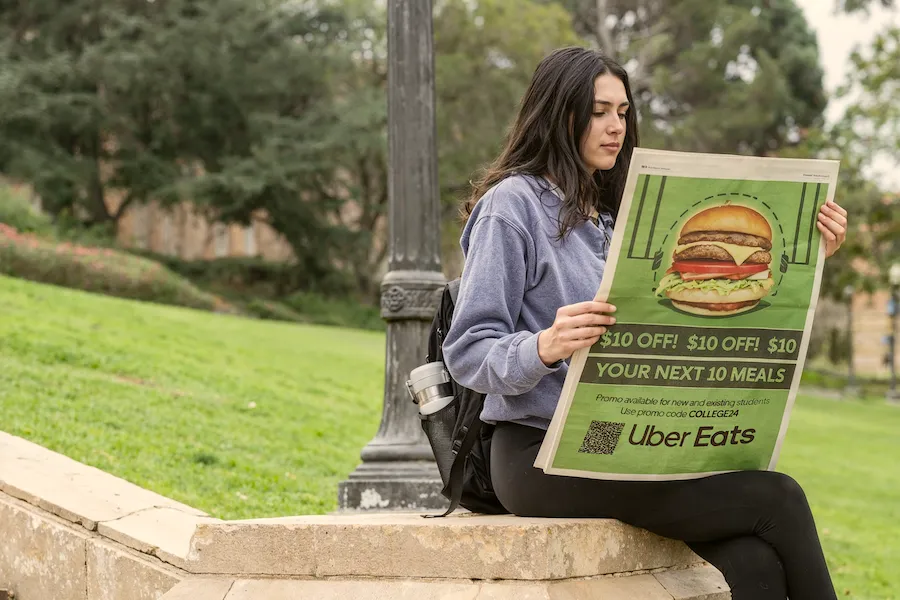
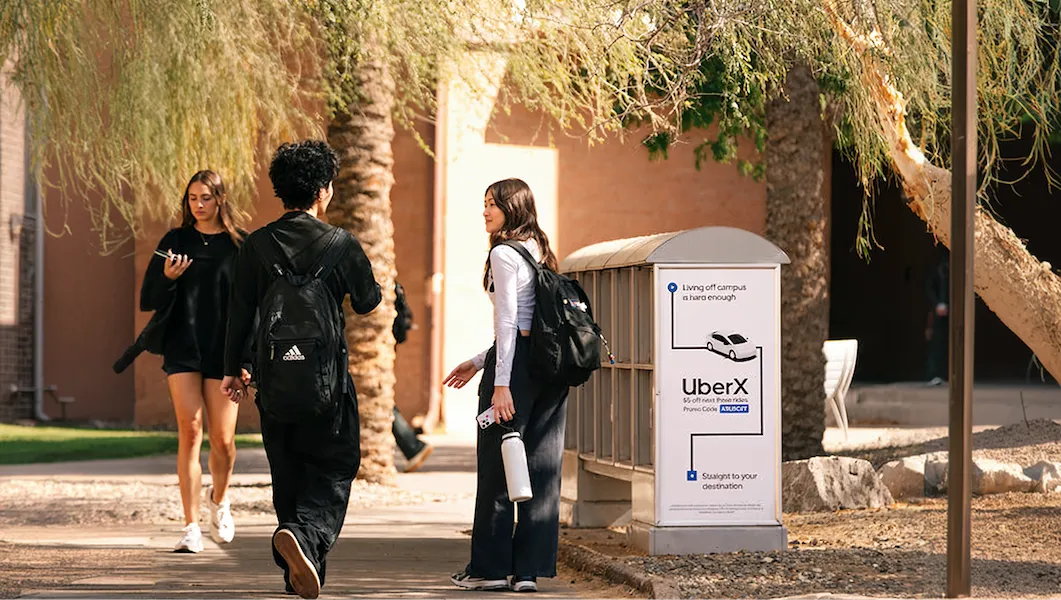
The Uber Eats campaign executed by flytedesk stands as the highest-performing college advertising campaign in our analysis. Across 35 campuses nationwide, the multi-month initiative prioritized sustained, concentrated visibility over short-term reach by showing up repeatedly in the places students move through daily. Students encountered consistent messaging across multiple on-campus touchpoints, such as digital screens, event sponsorships, and physical signage, creating a compounding exposure effect unique to dense campus environments.
The campaign's measurable outcomes distinguish it from typical awareness plays. Weekly engagement grew 32.6% throughout the core academic period, indicating that repeat exposure led to higher, not lower, campaign engagement. Students at exposed campuses were 31.4% more likely to redeem offers, 19.9% more likely to recall Uber Eats presence, and 40.0% more likely to name it as their preferred delivery platform compared to control campuses. These shifts indicate that campus media not only raises awareness but actually changes preference.
.jpg)
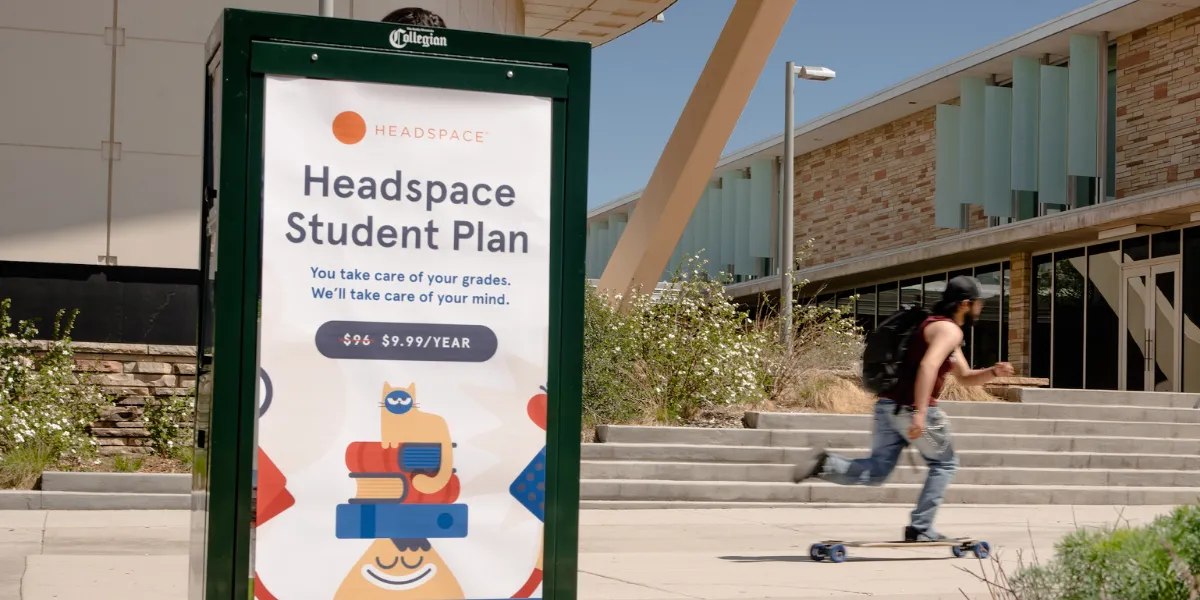
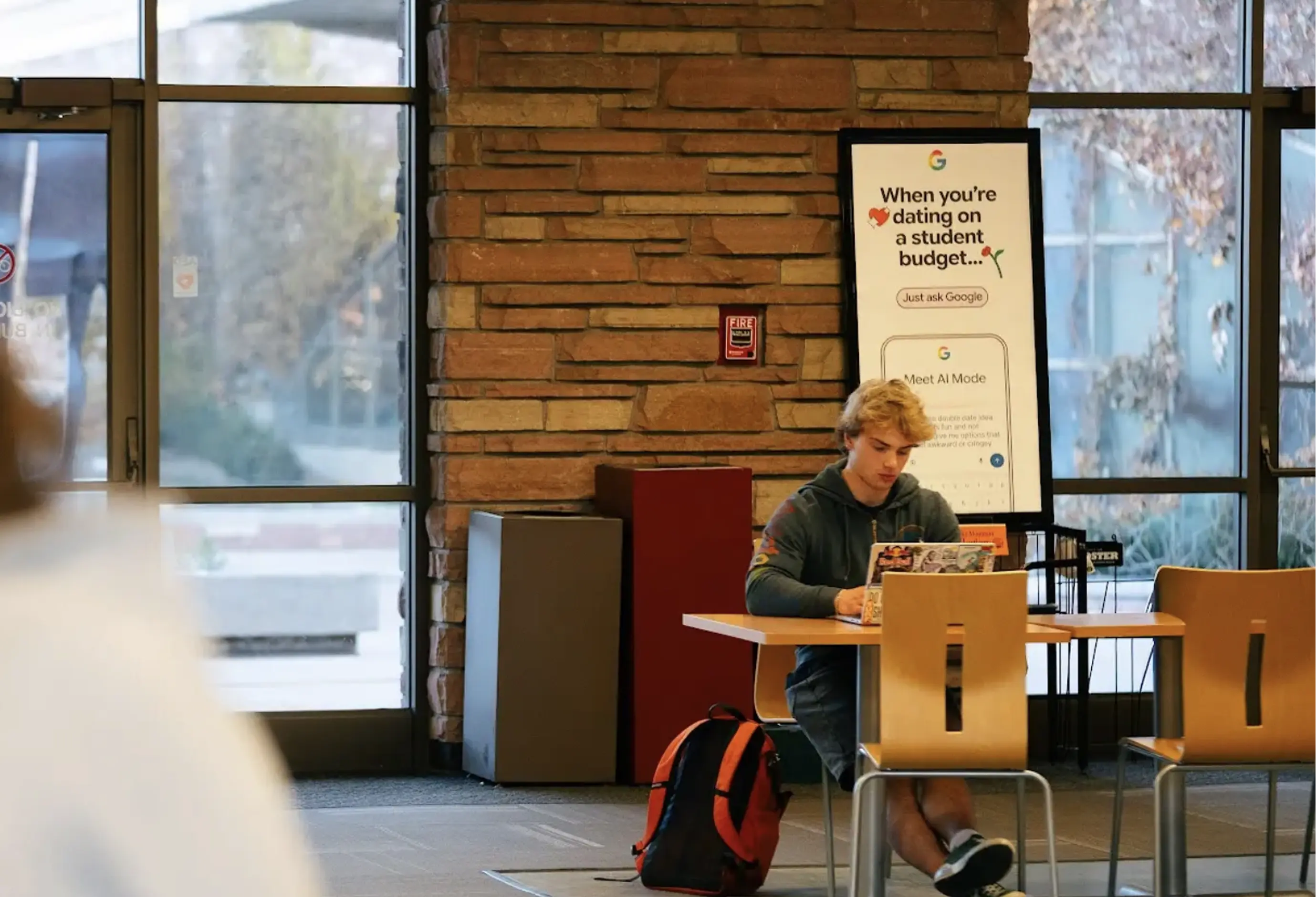
Google Gemini's 11-week campaign reached 2.6 million students across 96 universities during a critical decision-making window: the start of the academic year when students chose the tools they’ll use throughout the semester. flytedesk executed a high-concentration media strategy anchored in academic spaces where AI tool relevance is immediate: libraries, study halls, computer labs, and classrooms.
The campaign moved three interconnected metrics simultaneously. Awareness of Gemini's student plan increased 10 percentage points among exposed students, a meaningful gain in a category where multiple competitors vie for attention. Usage followed with a 6-point lift, while favorability and future intent each rose 7 points. The alignment suggests visibility translated into trial, not just recognition.
Campuses offering a promoted student discount saw amplified gains, reinforcing that incentives compound the effect of sustained presence. The campaign demonstrates how physical media can influence adoption trajectories in fast-moving software categories where students evaluate options collectively and publicly.
Clinique returned for a second consecutive year with its pastel-themed Back to Campus Tour, visiting five universities in September 2025. The activation centered on personalized service: students met with brand experts to receive skin-type assessments and customized three-step skincare routines. A "Who's Your Honey?" vending machine and product exploration stations for Black Honey, Pink Honey, and Nude Honey rounded out the experience.
The tour engaged 1,850 students across five stops, with giveaways including lipsticks, samples, and branded totes and sweatshirts. While engagement numbers were strong at individual stops, the campaign's limited geographic footprint and short duration restricted total reach compared to sustained multi-campus programs. The tour model prioritizes deep engagement over scale.
Ulta Beauty partnered with HerCampus Media to execute a six-city tour across southeastern colleges in September 2025. The program centered around the Ulta Beauty truck, supported by satellite experiences from partner brands including Polite Society, Isima, Snif, Anua, Digi Beauty, and Black Girl Sunscreen. Students sampled products, received free gifts, snapped photos, and entered sweepstakes for the grand prize: two tickets to Ulta Beauty World 2026.
The multi-brand structure offered variety and discovery opportunities beyond a single-product focus. Influencer appearances at each stop amplified social reach and created aspirational moments for attendees. However, the complexity of coordinating seven brands across six locations created potential for uneven execution quality between stops.
The campaign targeted beauty enthusiasts specifically, making it less universally accessible than broad-appeal campus programs. For the intended audience, the tour delivered strong value and brand recall.
Cosmetics brand Kosas launched its Soulgazer Mascara with a targeted three-university tour in September-October 2025, visiting Florida State University, the University of Alabama, and the University of Georgia for two-day stops at each location. The purple-themed portal featured mirror stations for mascara trials, interactive "What's Your Number?" tablets for personalized recommendations, and corresponding numbered postcards and press-on nail sets for attendees.
The two-day dwell time at each campus allowed for deeper engagement than single-day activations, building word-of-mouth momentum within the student body. The focused three-school approach concentrated the budget on high-impact presence rather than diluting resources across many locations.
However, the limited geographic scope and niche beauty category positioning restricted overall reach. The campaign succeeded as a targeted product launch activation for beauty enthusiasts at large SEC schools but lacked the scale and measurement rigor of platform-based campaigns.
Women's clothing brand Edikted executed a 10-campus tour in October 2025, with stops at the University of Chicago and Northwestern University, among others. The heart-themed, pink-washed activation drew students with a prize wheel for coupons and gift cards, a Campus Crush food truck, photo opportunities under a heart-shaped arch, and branded totes described as highly coveted in social media posts.
The tour generated viral moments, particularly around tote bag distribution. Edikted's social media team posted videos with captions noting high student demand. The food truck element added value by addressing student hunger while creating dwell time for brand engagement.
As a pure giveaway activation, the campaign prioritized awareness and positive brand sentiment over measurable conversion outcomes. Post-campaign sales attribution was unclear from available data, though coupon redemption provided some conversion tracking.
We also broke down the top campaigns into two subcategories based on specialty positioning and execution approach.
What makes a college advertising campaign effective?
Effective college advertising campaigns combine sustained campus presence with measurable outcomes. The highest-performing campaigns in our analysis shared three characteristics: multi-campus scale to reach critical mass, extended duration that builds familiarity over time rather than one-off exposure, and rigorous measurement methodologies that prove ROI through controlled studies or pre/post analysis. Campaigns executed through dedicated college marketing platforms like flytedesk demonstrated 31-40% performance lifts compared to digital-only approaches, suggesting that physical campus presence acts as a force multiplier for brand messaging.
How long should a college advertising campaign run?
Campaign duration depends on objectives and budget, but our data shows sustained programs outperform short-term activations. The top two campaigns in our analysis – Uber Eats and Google Gemini via flytedesk – ran for multiple months and 11 weeks respectively, allowing messaging to compound over time as students encountered repeated exposures across campus touchpoints. Experiential tours typically run 1-3 weeks with single-day or two-day campus stops, which generate strong engagement spikes but lack the sustained visibility that drives preference shifts. For measurable behavior change, allocate at least 6-8 weeks during key decision windows like back-to-school or spring semester planning.
What budget is required for a successful college advertising campaign?
Budget requirements vary widely based on scale and execution model. Platform-based campaigns through flytedesk that reach 30+ campuses with omnichannel media typically require mid-five to six-figure investments, delivering cost-efficient reach given the concentrated student populations. Experiential mobile tours that visit 5-10 campuses with branded environments, staffing, and swag distribution generally range from the low- to mid-six figures, depending on activation complexity. The critical factor is budget efficiency. Our analysis shows campaigns with strong measurement frameworks demonstrate clear ROI, allowing brands to confidently scale investment. Rather than asking "what should I spend," brands should prioritize platforms that prove incremental impact through controlled studies and attribution modeling.
Ready to launch a data-driven college advertising campaign? Contact flytedesk to explore how omnichannel campus media can drive measurable results for your brand.

On this page
Headings

.avif)

%202.svg)





.webp)
.webp)