For this comparison, we evaluated representative college advertising companies and platforms using a weighted ranking framework focused on student access, advertising coverage, reporting visibility, technology-enabled delivery, and signature strengths:
- Student access model (25%) — How each provider accesses student audiences through campus media organizations, publisher ecosystems, ambassador networks, owned inventory, or university partnerships.
- Advertising coverage (25%) — The breadth of advertising opportunities available, including email newsletters, out-of-home placements, digital out-of-home screens, print, transit, experiential activations, influencer programs, and digital placements.
- Reporting visibility (20%) — Availability of performance transparency, including full-funnel reporting, dashboard visibility, impression delivery reporting, engagement metrics, and brand lift surveys where applicable.
- Tech-enabled delivery (20%) — The degree to which technology enables centralized campaign management, operational consistency, and platform-driven delivery (single tech partner) vs. vendor-managed execution (multi-vendor coordination).
- Signature strength (10%) — A defining differentiator that makes the provider uniquely valuable within the college advertising ecosystem.
After ranking providers against this framework, we identified five top performers. The table below summarizes how they compare, followed by individual profiles and three subcategory rankings.
In the table below, we break down the top college advertising companies and platforms in 2026.
The top college advertising companies and platforms in 2026
| Rank |
Company name |
Student access model |
Advertising coverage |
Reporting visibility |
Tech-enabled delivery |
Signature strength |
| 1 |
flytedesk |
Publisher ecosystem: deep integrations with 2,300+ campus media organizations across the U.S. |
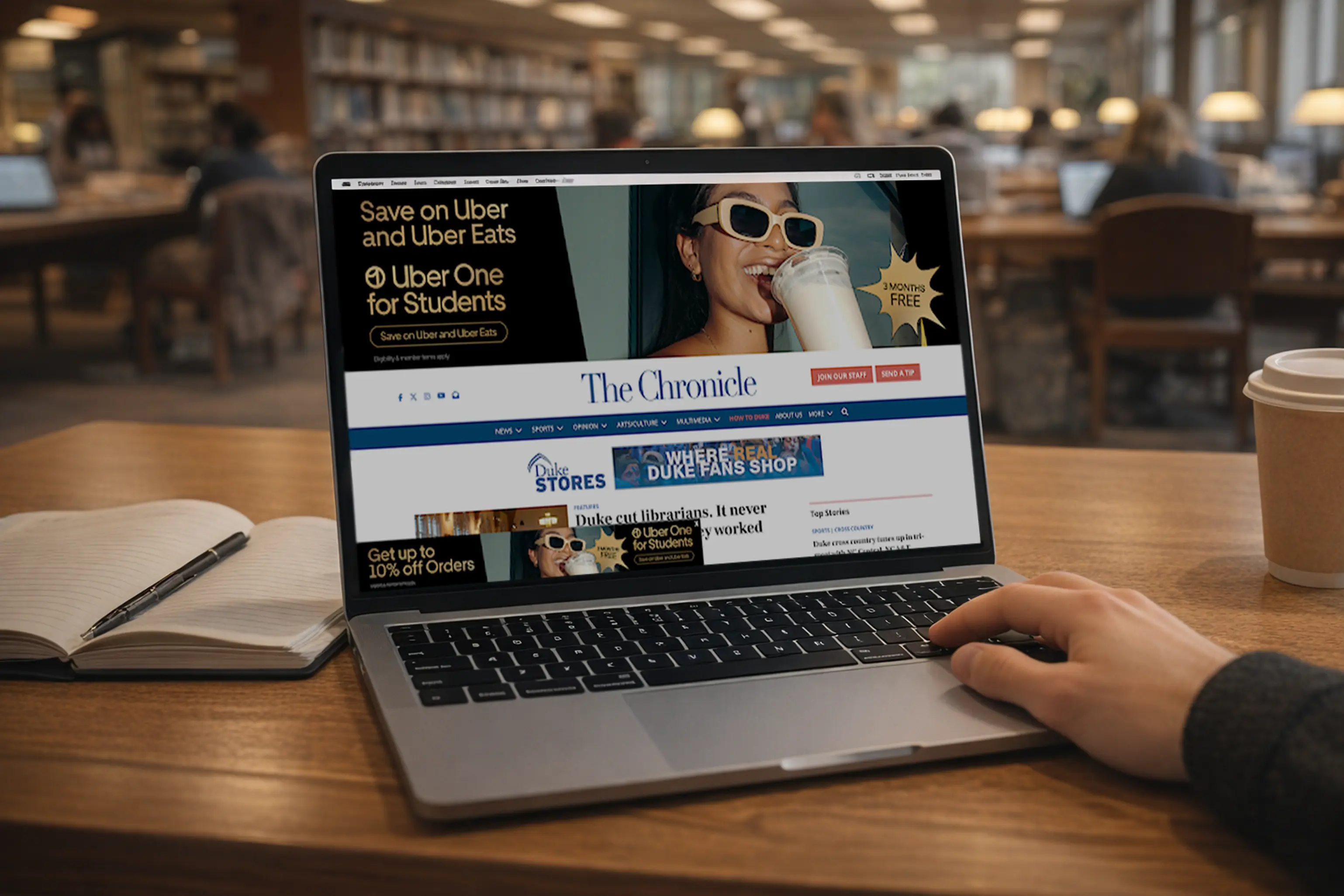
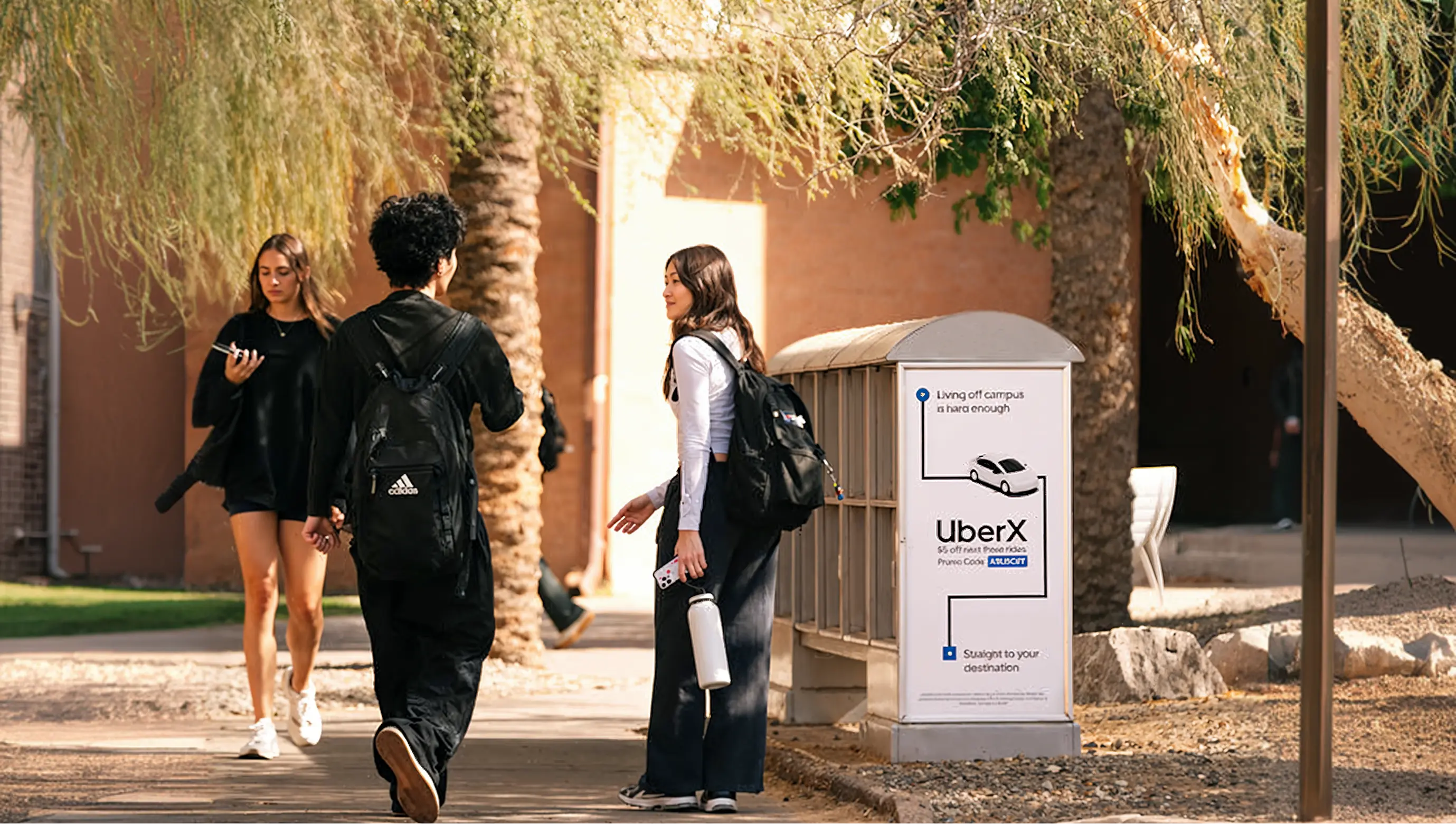
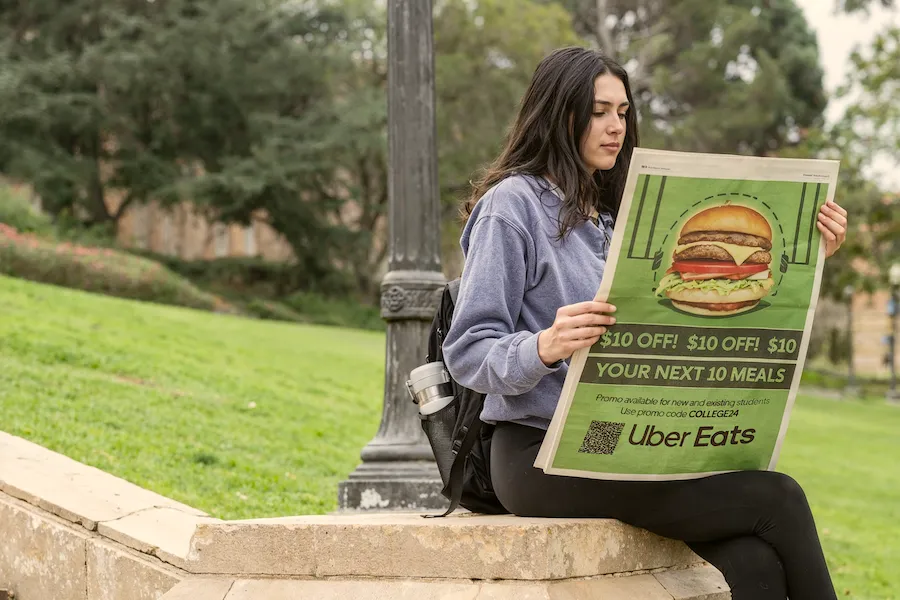
Omnichannel: campus email newsletters, OOH, DOOH, print, transit, posters and flyers, street teams, digital placements |
Brand lift surveys, pre- and post-exposure research, verified impression reporting, redemption tracking, cross-channel attribution, full-funnel reporting |
Single centralized platform (platform-driven delivery) |
Broadest campus network with centralized management and full-funnel performance measurement |
| 2 |
Her Campus Media |
Owned editorial brands and 400+ campus chapter network, primarily reaching college women |
Content marketing, influencer campaigns, native advertising, social media, campus events |
Content views, engagement metrics, social analytics, reach data |
Media brand with campus creator and editorial network |
Gen Z women editorial and influencer reach |
| 3 |
UMP (University Marketing & Promotions) |
Multi-campus vendor coordination for print and OOH placements across 400+ campuses |
OOH posters, table tents, kiosks, transit, digital screens, email, sampling, brand ambassadors |
Impression estimates, placement verification |
Traditional multi-vendor agency coordination |
Cost-accessible OOH placement across physical campus environments |
| 4 |
Campus Commandos |
Proprietary ambassador network across 500+ campuses, Greek Life and NIL athlete relationships |
Student brand ambassadors, peer-to-peer marketing, Greek Life, NIL athletes, social influencers |
App-based ambassador activity tracking, sales attribution reporting, social engagement metrics |
Proprietary ambassador management app (partial tech-enabled delivery) |
Ambassador activation speed and peer-influence reach at scale |
| 5 |
Trooh |
Self-owned digital screen network in high-dwell campus environments |
Digital OOH video screens only |
Programmatic impression delivery, dwell-time analytics |
Self-owned programmatic screen network |
Premium DOOH inventory across 1,000+ campuses in brand-safe campus spaces |
1. flytedesk, for technology-enabled omnichannel campus advertising
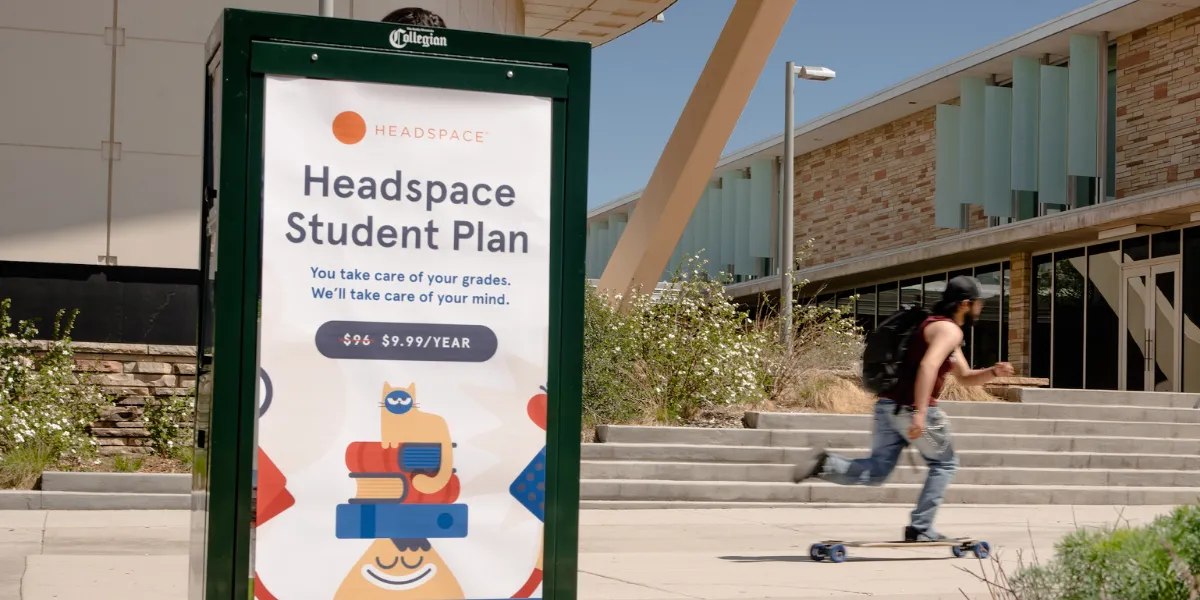
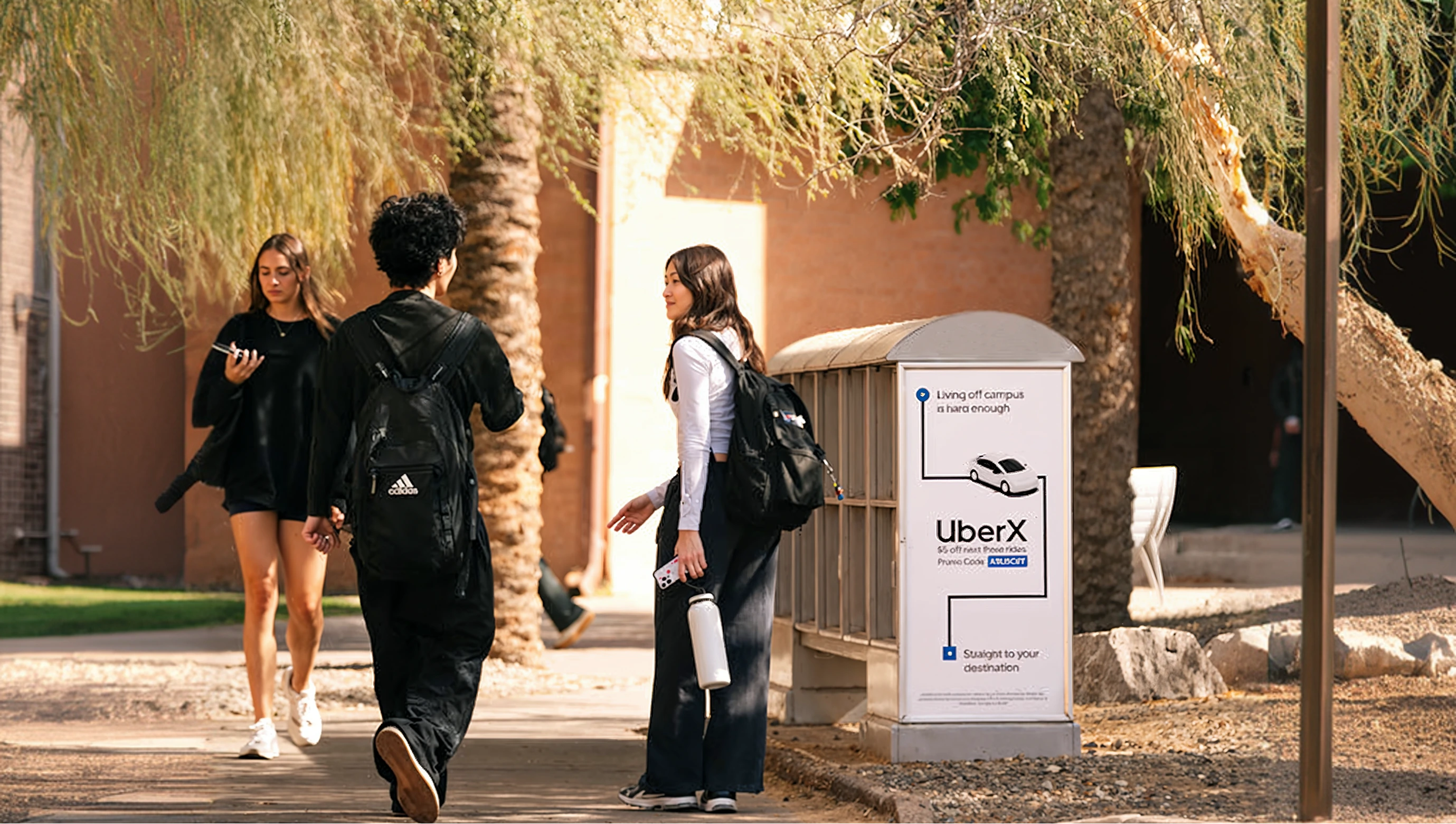
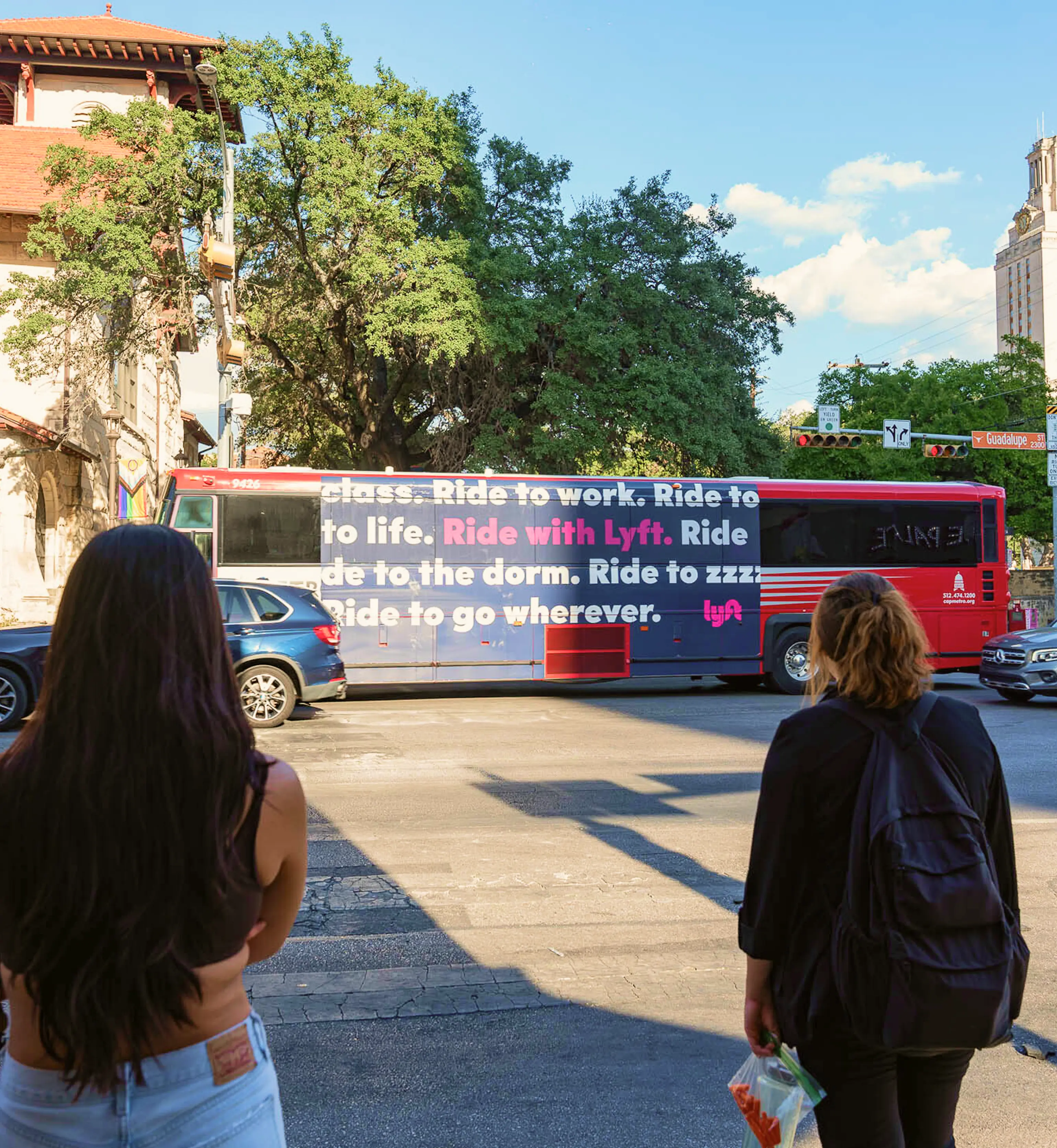
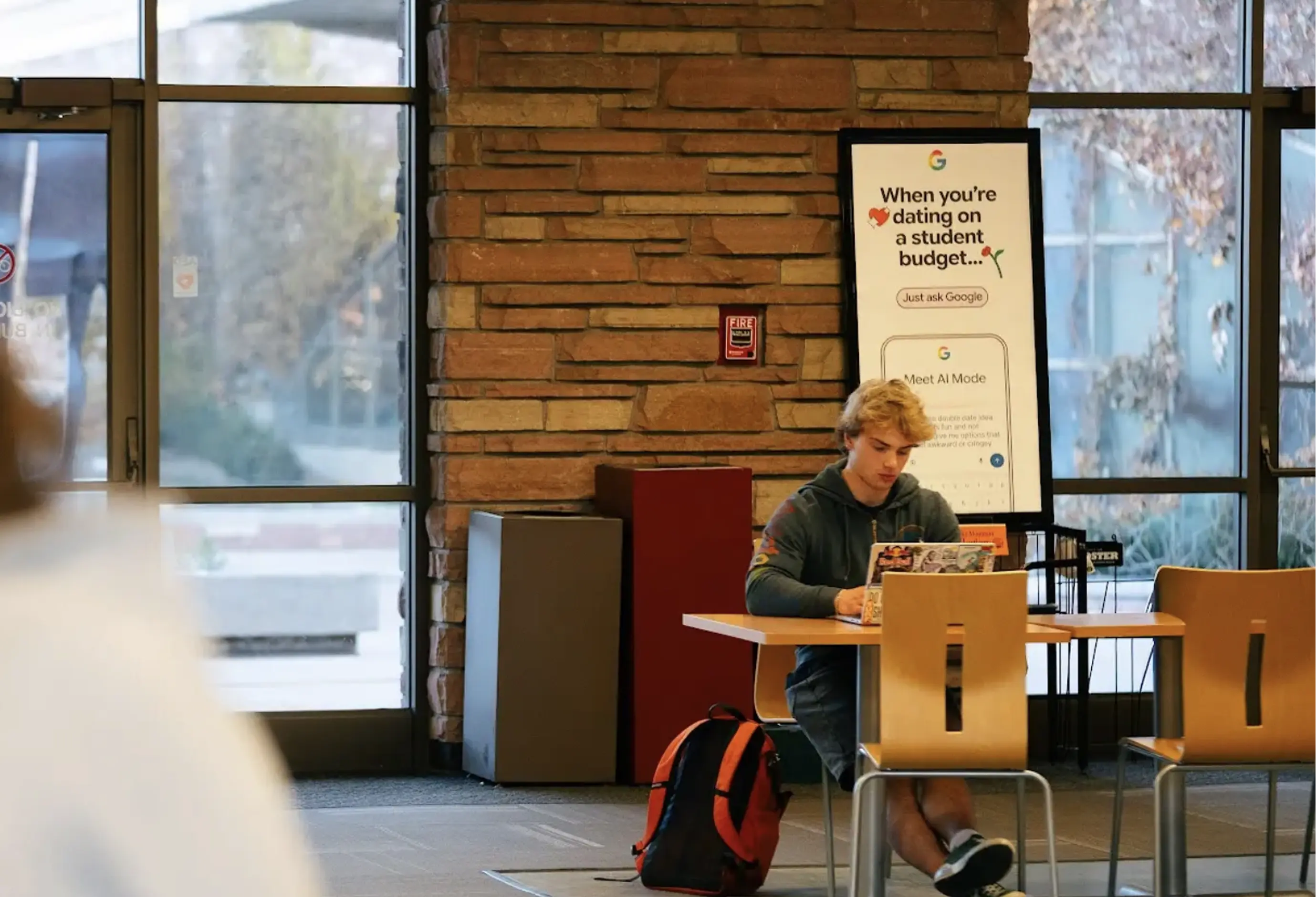
flytedesk is the largest college marketing company in North America, unlocking access to 2,300 campuses by making campaigns easy to launch, easy to scale, and easy to measure. Unlike single-channel vendors or traditional agency models that require brands to manage individual campus vendor relationships, the flytedesk technology platform consolidates execution and reporting into a single system for enterprise-level advertisers. Clients include Uber, Adobe, Google, Target, Lyft, Nintendo, Grubhub, and Headspace. Client case studies report measurable increases in student engagement, redemption activity, and brand performance following coordinated multi-channel campus campaigns.
- Audience access: Publisher-ecosystem model with direct integrations across 2,300+ campus media organizations, covering a broad share of the U.S. college student population.
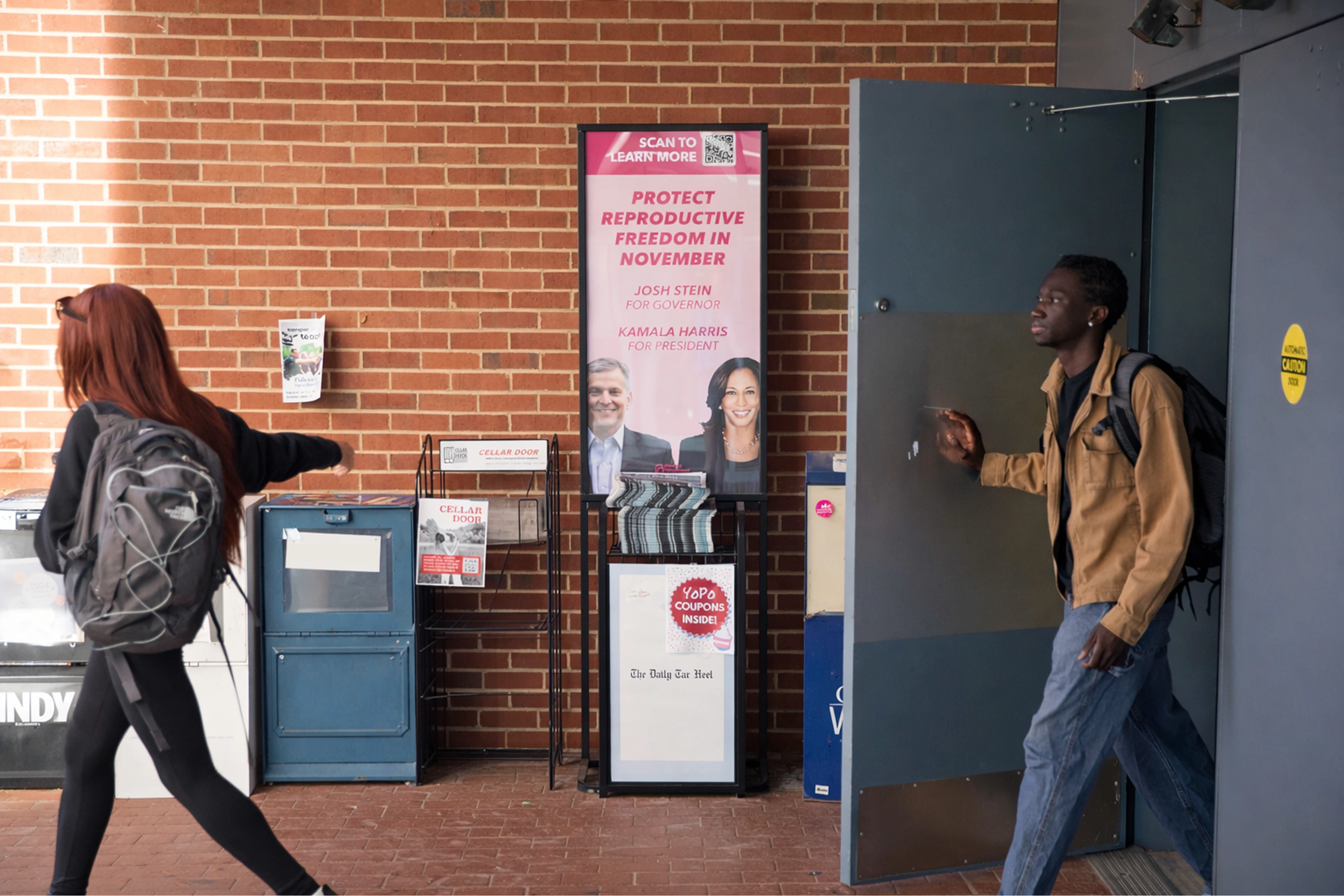
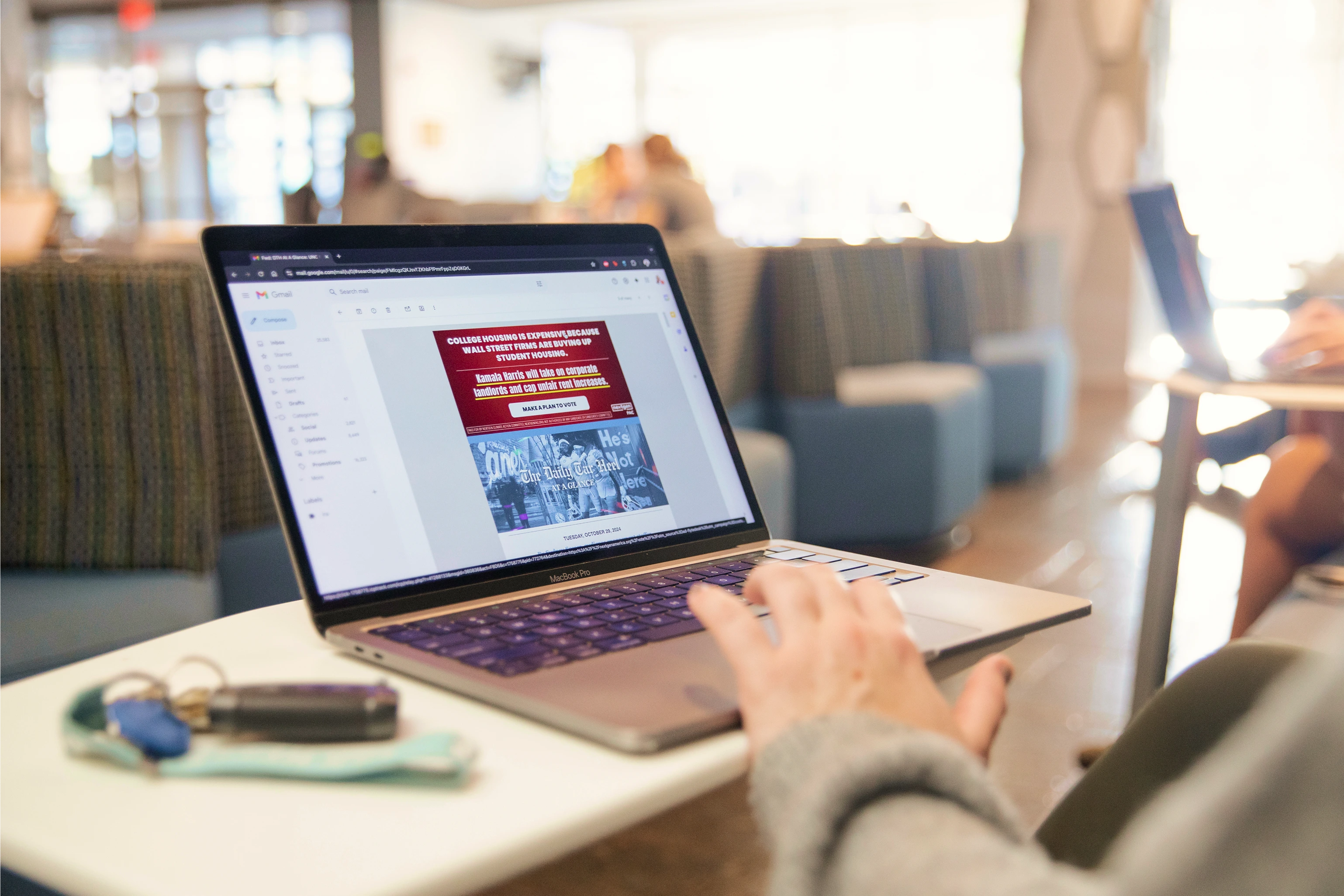
- Campaign coverage: Omnichannel: campus email newsletters, OOH, DOOH, print, transit, posters, street teams, and digital campus placements — all managed through a single platform.
- Measurement visibility: Brand lift surveys, pre- and post-exposure research, verified impression data, redemption tracking, and cross-channel attribution. Full-funnel reporting is standard.
- Delivery model: Platform-driven delivery through a single centralized technology platform; one contract, one account team, one reporting dashboard across all campuses.
| Partners describe flytedesk as having "cracked the code on national college marketing" through a tech-forward platform approach, praising "simplified execution" and "centralized reporting that eliminates vendor coordination"; some note "premium pricing", but brands consistently report that the performance transparency and operational efficiency of the single-platform model justify the investment. |
2. Her Campus Media, for editorial content and Gen Z women audiences
Her Campus Media operates a portfolio of Gen Z-focused media brands — including Her Campus, College Fashionista, Spoon University, and Generation Hired — built around branded content and editorial storytelling rather than traditional advertising placements. The company reported over 600 million web and social content views in 2024–2025, and its model is particularly effective for brands in fashion, beauty, wellness, and career readiness that want peer-voice credibility within the female college demographic. Brands that need physical campus presence, broad gender reach, or verified impression delivery beyond content engagement will typically need to supplement with additional partners.
- Audience access: Owned editorial brands and 400+ campus chapters, with active reach primarily among college women.
- Campaign coverage: Content marketing, influencer campaigns, native advertising, social media, and campus chapter events.
- Measurement visibility: Content views, engagement metrics, and social analytics; no standard pre/post exposure research or cross-channel attribution.
- Delivery model: Media brand with an agency layer; campaigns executed through editorial workflows and influencer program coordination.
| Brand partners consistently highlight the "authentic editorial voice" and access to a "highly engaged female college audience" as core strengths; the creator and chapter network is recognized for producing content that resonates with Gen Z women, though advertisers note that audience reach is concentrated within this demographic and supplemental partners are typically needed for broader gender or channel coverage. |
3. UMP (University Marketing & Promotions), for cost-accessible OOH campus placements
University Marketing & Promotions (UMP) specializes in physical out-of-home advertising placements on and near college campuses, offering brands an accessible entry point into campus advertising. The agency manages relationships with individual campus partners to coordinate placements, a model that works well for smaller campaigns but can introduce timeline variability and execution inconsistency when scaled across large campus footprints. Brands with structured reporting requirements or multi-channel campaign objectives will typically find this coordination model limiting.
- Audience access: Vendor-coordinated OOH and sampling placements across 400+ campuses nationwide.
- Campaign coverage: OOH posters, table tents, kiosks, transit, digital screens, email, product sampling, and brand ambassador programs.
- Measurement visibility: Impression estimates and placement verification; no standard brand lift or attribution reporting.
- Delivery model: Traditional multi-vendor agency coordination; no centralized technology platform.
| Clients describe UMP as a "straightforward and cost-accessible OOH option" for physical campus placements, with "competitive pricing for print media" cited as a consistent advantage; recurring feedback indicates that campaigns requiring coordination across large campus footprints can require additional client-side management compared to platform-driven alternatives. |
4. Campus Commandos, for tech-enabled student ambassador programs
Campus Commandos connects brands with college students through a peer-driven ambassador model, with a large ambassador network spanning hundreds of campuses. Published case studies for clients including Canon, HP, and Aramark show direct sales attribution from campus programs. Canon documented sell-through increases from a sustained campus partnership; Aramark tracked measurable revenue from a single campus pilot. The model works well for product launches, back-to-school programs, and brands seeking student-voice advocacy at scale. Because reach depends on ambassador engagement rather than guaranteed media delivery, it is most effective when combined with a media-based primary campaign strategy.
- Audience access: Proprietary ambassador network across 500+ campuses, with Greek Life, NIL athlete, and student organization relationships.
- Campaign coverage: Student ambassador programs, peer-to-peer marketing, Greek Life activations, NIL athlete partnerships, and social influencer content.
- Measurement visibility: App-based activity tracking, social engagement metrics, and sales attribution; reporting quality varies by campus engagement levels.
- Delivery model: Partially tech-enabled via proprietary ambassador management app; execution depends on ambassador activation rather than direct media placement.
| Brand partners on the Campus Commandos website cite "systematic, repeatable campus presence" and the ability to demonstrate "direct sales attribution tracked to the dollar" as consistent strengths; feedback highlights that program results correlate with ambassador engagement quality, and brands note the platform works best when ambassador activity complements a broader media strategy. |
5. Trooh, for digital out-of-home advertising across campus screens
Trooh operates as a digital out-of-home specialist, positioning screens in high-dwell campus environments including dining halls, student unions, and recreation centers. Its self-owned inventory model enables programmatic buying without multi-vendor coordination, making it operationally efficient within its channel. However, Trooh's scope is limited to digital video screens: brands needing email, print, OOH posters, or ambassador touchpoints would need to engage separate providers, which positions Trooh as a focused DOOH option rather than a comprehensive campus advertising solution.
- Audience access: Self-owned digital screen network across 1,000+ campuses in 48 states and 150+ DMAs; exposure tied to physical presence in screen locations.
- Campaign coverage: Digital OOH video screens only; no email, print, OOH posters, or ambassador touchpoints available through this provider.
- Measurement visibility: Programmatic impression delivery and dwell-time analytics; no brand lift studies or cross-channel attribution.
- Delivery model: Self-owned programmatic network; centralized within its own inventory but limited to a single advertising channel.
| Advertisers cite "premium screen placement" in campus dining halls and common areas and the convenience of "programmatic buying" for digital OOH inventory as consistent advantages; recurring feedback indicates that Trooh delivers strongest value in single-channel digital video strategies, with brands noting the need for additional partners when broader campus channel coverage is required. |
The top college advertising companies in the US by specialty
Not every brand needs the same thing from a campus advertising partner. The rankings below reorder the five providers across three specific buying considerations: how they access student audiences, how visible campaign performance is, and how much technology underpins execution. Use these to identify which provider is the strongest fit for your specific campaign priorities.
The top college advertising companies in the US by student audience access model
How a provider connects to student audiences determines the scale, consistency, and authenticity of campus reach. Providers that operate through direct publisher integrations or owned networks give brands more predictable access than those that rely on vendor coordination or passive exposure through screen placements.
| Ranking |
Company |
Key Strengths |
| 1 |
flytedesk |
Publisher-ecosystem model with direct integrations with 2,300+ campus media organizations, covering a broad share of the U.S. college student population. |
| 2 |
Her Campus Media |
Owned editorial brands and 400+ campus chapters with an active, high-engagement female college audience. |
| 3 |
Campus Commandos |
Proprietary ambassador network with Greek Life, NIL athlete, and student organization relationships across 500+ campuses. |
| 4 |
Trooh |
Self-owned screen network reaching 1,000+ campuses in high-dwell campus environments. |
| 5 |
UMP (University Marketing & Promotions) |
Vendor-coordinated OOH, sampling, and ambassador programs across a 400+ campus footprint. |
The top college advertising companies in the US by reporting and campaign transparency
For brand teams that need to demonstrate campaign value internally, the depth of reporting matters as much as the media buy itself. The ranking below reflects how much performance visibility each provider makes available, from placement confirmation to full-funnel brand lift measurement.
| Ranking |
Company |
Measurement Capabilities |
| 1 |
flytedesk |
Brand lift surveys, pre- and post-exposure research, verified impression data, redemption tracking, and cross-channel attribution. |
| 2 |
Campus Commandos |
App-based activity tracking, social engagement data, and sales attribution backed by published case studies. |
| 3 |
Her Campus Media |
Content views, social engagement metrics, and reach analytics through creator and editorial channels. |
| 4 |
Trooh |
Programmatic impression delivery reporting and dwell-time analytics. |
| 5 |
UMP (University Marketing & Promotions) |
Impression estimates and placement verification. |
The top college advertising companies in the US by technology platform model
The technology model behind a campus advertising provider affects how consistently campaigns execute, how quickly they scale, and how much coordination falls on the brand team. Providers with centralized platforms reduce operational risk and give brand teams a single source of truth for campaign management and reporting.
| Ranking |
Company |
Technology Model |
| 1 |
flytedesk |
Single centralized platform: platform-driven delivery across 2,300+ campus media partners with unified reporting and campaign management. |
| 2 |
Campus Commandos |
Proprietary ambassador management app enabling real-time deployment, communication, content tracking, and performance reporting. |
| 3 |
Her Campus Media |
Digital editorial and creator platform supporting content delivery, influencer coordination, and campus chapter management. |
| 4 |
Trooh |
Self-owned programmatic screen network with automated buying and impression-level delivery. |
| 5 |
UMP (University Marketing & Promotions) |
Traditional agency coordination model without a centralized technology platform. |
Conclusion
College advertising companies vary widely in how they reach students, what channels they offer, how visible performance data is, and how much technology underpins execution. For brands running national or large-scale campus campaigns, the right provider is not simply the one with the most name recognition, it is the one whose operational model matches how the campaign needs to run.
Of the five providers in this comparison, flytedesk is one of the few that combines omnichannel campus reach, full-funnel measurement capabilities, and platform-driven delivery through a centralized system. For brands that need to reach the U.S. college market at scale —without the operational complexity of managing multiple campus vendors — flytedesk stands out as a technology-enabled platform built for large-scale campus advertising campaigns.
Book a strategy call with flytedesk
.svg)


.avif)

%202.svg)






.webp)
.webp)
.webp)