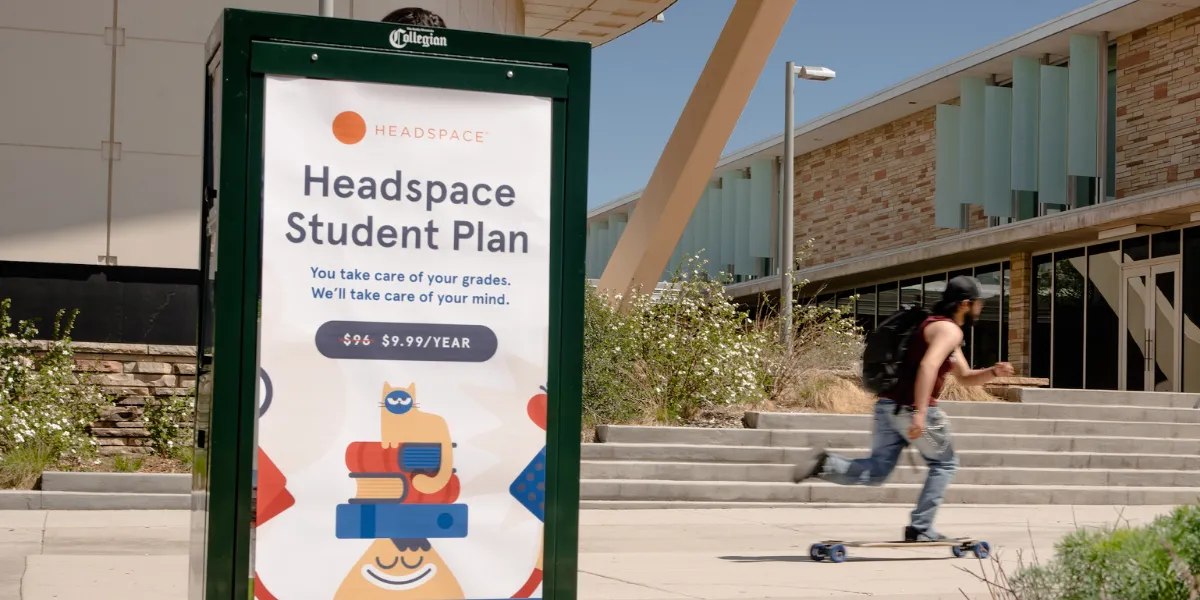
Brands targeting college students face a strategic decision: should they invest in college media platforms that deliver omnichannel campus advertising, or build ambassador programs that activate peer-to-peer influence?
We compared representative college media platforms and ambassador program models serving the U.S. college market using practical campaign evaluation criteria:
- Reach & scale (30%): Campus coverage, student population accessible, and ability to scale across institutions
- Cost profile (20%): Investment characteristics, operational efficiency, and cost-per-campus economics
- Audience engagement style (25%): How students experience brand messaging (ambient exposure vs peer interaction)
- Measurement visibility (25%): Availability of verified data, brand lift studies, attribution capabilities, and reporting depth
College media vs college ambassadors
| # |
Company/platform |
Approach |
Reach & scale |
Cost profile |
Audience engagement style |
Measurement visibility |
| 1 |
flytedesk |
College media network and campus advertising platform |
2,300+ campuses; cross-channel delivery across campus newspapers, email newsletters, OOH, DOOH, transit, digital placements; 96% of U.S. students; 4.4 billion monthly impressions |
Scalable media investment; custom campaigns based on scope and channels; platform-driven efficiency reduces coordination overhead |
Ambient repeated exposure across daily campus touchpoints; students encounter brand messaging in trusted campus environments multiple times |
Full-funnel campaign reporting, including brand lift surveys, verified impressions, pre/post-exposure studies, and attribution capabilities |
| 2 |
Her Campus Media |
College Media (Content-Focused) |
National digital reach is primarily focused on college women; campus chapters across select institutions |
Sponsored content and campaign packages; content integration model |
Editorial content integration; branded storytelling through owned media platform and campus chapters |
Engagement metrics, social analytics, and content performance tracking |
| 3 |
Trooh |
College Media (DOOH-exclusive) |
DOOH network with campus-focused digital screen inventory across multiple markets |
CPM-based programmatic buying; media investment focused on digital displays |
Digital screen visibility in high-traffic campus areas: passive exposure model |
Programmatic reporting, verified play confirmations, and impression estimates based on foot traffic data |
| 4 |
Campus Commandos |
Ambassador Program Management |
Coverage depends on ambassador recruitment capacity; campaign scale varies by program scope |
Campaign-based management fees: lower upfront media cost, but labor-intensive coordination |
Direct peer-to-peer engagement; ambassadors share experiences through social content, events, and sampling |
App-based activity tracking, event attendance reporting, social metrics, and self-reported reach |
| 5 |
Social Ladder |
Ambassador Platform Software |
Dependent on the brand's recruiting capacity, the platform enables management but doesn't provide reach |
Software subscription based on community size and features |
Peer-delivered messaging through brand-built ambassador communities |
Social engagement tracking, content performance analytics, task completion monitoring, and limited attribution |
1. flytedesk, for omnichannel campus advertising at scale
flytedesk is a tech-enabled college marketing platform that powers cross-channel campus advertising for 2,300+ colleges and universities representing 96% of U.S. students through a single centralized infrastructure that connects brands to campus email newsletters, newspapers, OOH, DOOH screens, transit advertising, posters, flyers, campus news sites, and street teams. The platform distinguishes itself through controlled exposure studies that measure brand awareness, consideration, and purchase intent on campuses where ads ran versus control campuses, integrating verified impression tracking, brand lift surveys, and redemption data for full-funnel campaign reporting, supporting rigorous measurement of campaign impact.
- Pricing model: Custom campaigns based on scope and channels
- Channel coverage: Campus email newsletters, campus newspapers, OOH, DOOH, campus transit, posters and flyers, campus news sites, digital placements, street teams, and sampling
- Measurement approach: Full-funnel campaign reporting including pre/post-exposure studies, brand lift surveys, verified impression tracking, and attribution capabilities
- Services offered: Platform connecting brands to campus email newsletters, OOH, DOOH (digital screens), campus newspapers, campus transit, posters and flyers, campus news sites, street teams,and sampling
Clients consistently praise flytedesk's tech-forward approach and ability to bring marketing opportunities to big brands at scale, noting it cracked the code on national college marketing. Some mention premium pricing compared to single-channel vendors, but brands report that the efficiency gains and ability to diversify revenue and reinvest in new ideas more than justify the investment.
2. Her Campus Media, for women-focused college content
Her Campus Media operates an owned media network focused primarily on college women through editorial content, campus chapters, and influencer partnerships. The platform delivers branded content integrations, social campaigns, and campus activations through its network of student chapter leaders and content creators. Her Campus emphasizes authentic storytelling that resonates with its core demographic and provides engagement analytics focused on content views and social reach.
- Pricing model: Sponsored content and campaign packages
- Channel coverage: Owned editorial platform, social media influencers, campus chapters, and branded content
- Measurement approach: Engagement metrics, social analytics, and content performance tracking
- Services offered: Branded content creation, social media campaigns, campus chapter activations, and influencer partnerships
Brands appreciate strong engagement from college women, noting the editorial voice resonates with the target demographic. Some mention a narrower reach than integrated platforms, but find that the specific audience limits scalability for broader campus campaigns.
3. Trooh, for digital campus screens
Trooh operates a network of digital out-of-home screens with campus-focused inventory and programmatic buying capabilities. The platform focuses exclusively on large-format digital displays positioned in high-traffic campus areas. Trooh owns and manages its screen infrastructure and offers programmatic campaign execution with standard DOOH reporting metrics.
- Pricing model: CPM-based programmatic buying
- Channel coverage: Digital OOH screens (single channel)
- Measurement approach: Programmatic reporting, verified play confirmations, and impression estimates based on foot traffic data
- Services offered: Digital OOH advertising on self-owned campus screen network with programmatic buying interface
Advertisers note the established campus footprint of the digital screens. Some, however, cite limited channel diversity compared to more integrated advertising platforms.
Campus Commandos recruits and manages student brand ambassadors across college campuses for companies like Coca-Cola, Canon, and Vitamin Water. The platform coordinates campus representatives who host sampling events, distribute products, create social content, and promote brands through peer networks. Campus Commandos provides proprietary app-based management tools to track ambassador activity and coordinate campus activations.
- Pricing model: Campaign-based fees for recruitment, management, and coordination
- Program structure: Recruit student ambassadors per campaign; participation commitments vary by campaign structure; compensation varies by brand (hourly, product, or hybrid)
- Measurement approach: App-based activity tracking, event attendance reporting, social content metrics, and self-reported reach
- Services offered: Ambassador recruitment, training and onboarding, campaign coordination, event management, social media activation, and product sampling logistics
Brands value access to student representatives and on-the-ground campus presence through peer networks, noting that the management infrastructure simplifies coordination.
5. Social Ladder, for ambassador community management
Social Ladder provides software for brands to build and manage their own ambassador and influencer communities at scale. The platform handles ambassador discovery, onboarding, task assignment, content approval, payment processing, and performance analytics. Social Ladder works with retail, beauty, and lifestyle brands, managing ambassador communities from dozens to hundreds of participants.
- Pricing model: Software subscription based on community size and features
- Program structure: Brands build their own ambassador programs; the platform provides management infrastructure; commission-based, product-based, or paid models are supported
- Measurement approach: Social engagement tracking, content performance analytics, task completion monitoring, conversion attribution (requires integration)
- Services offered: Ambassador management software including recruitment tools, community communication, task distribution, content moderation, payment automation, and analytics dashboard
Brands appreciate platform features for managing ambassador programs at scale and automation that reduces manual coordination work, noting the software approach provides control and flexibility.
Best for your campaign goals
Which works best for brand awareness?
| # |
Company / platform |
Why it works for brand awareness |
| 1 |
flytedesk |
Immediate access to thousands of campuses through a single platform; students encounter brand messaging multiple times across touchpoints (campus transit, newspapers, email, digital screens), creating frequent, surround-sound exposure; brand lift surveys measure actual awareness change using control groups with verified impression counts across channels |
| 2 |
Her Campus Media |
National digital reach with focused demographic coverage; content remains accessible across owned platform for repeated engagement; content performance tracking and social analytics provide engagement-based verification |
| 3 |
Trooh |
Large DOOH network with campus coverage across multiple markets; digital screens provide repeated exposure to students passing high-traffic locations; verified play confirmations and impression estimates based on foot traffic data |
| 4 |
Campus Commandos |
Coverage depends on ambassador recruitment capacity; reach varies significantly based on ambassador network size and social presence, with more limited repeated exposure; self-reported metrics make it more difficult to isolate brand awareness from content engagement |
| 5 |
Social Ladder |
Reach dependent on the brand's capacity to build ambassador communities; exposure dependent on ambassador activity and posting frequency; limited awareness verification beyond activity logs and task completion tracking |
Which works best for peer engagement?
| # |
Company / platform |
Why it works for peer engagement |
| 1 |
Campus Commandos |
Peer recommendations carry strong influence in student communities; ambassadors use their existing campus networks, answer questions, demonstrate products, and offer samples and education; ambassador-created content reflects student experiences and perspectives that resonate as peer content rather than advertising |
| 2 |
Social Ladder |
Ambassador-led communication creates peer validation through personal networks that drive trust-based recommendations; direct ambassador engagement through events and social interactions facilitates product dialogue; user-generated content reflects genuine ambassador experiences with authentic peer storytelling |
| 3 |
flytedesk |
Campus media doesn't replace one-on-one peer endorsement, but it shapes something just as powerful: what students believe their peers are already using. flytedesk's own research found students are up to 2.6x more likely to buy a brand they perceive as popular on campus, and a matched-market study confirmed campus visibility itself shifts that perception, not just awareness. Since 59% of students buy what their friends buy, media that moves perceived peer adoption is tapping the same purchase driver ambassador programs pursue directly, just at much larger scale |
| 4 |
Her Campus Media |
Editorial voice and student contributors provide relatable content; campus chapters create peer connection and enable some two-way engagement through social comments and community interaction; editorial content balances brand messaging with platform voice while student contributors add authenticity |
| 5 |
Trooh |
Digital screens deliver visibility but lack personal peer endorsement element; provide static messaging without interaction capability; and display clear branded content in an advertising format |
Which offers better measurement visibility?
| # |
Company / platform |
Why it offers superior measurement |
| 1 |
flytedesk |
Pre/post-exposure studies with control groups measure awareness lift, consideration change, and purchase intent shifts using statistical significance testing; verified impression delivery across all channels with redemption tracking where codes are used and consolidated reporting of performance; full-funnel reporting identifies which channels, campuses, and creative drive results to enable strategic refinement |
| 2 |
Trooh |
Programmatic reporting with verified play confirmations and impression estimates using foot traffic methodology; programmatic attribution within the DOOH ecosystem with campaign-level performance tracking; programmatic optimization by location, time, and creative performance provides DOOH-specific insights |
| 3 |
Her Campus Media |
Content performance metrics track reach and engagement through social analytics that measure content impact; content-level attribution through tracking links and engagement data with social referral tracking; content performance data guides editorial strategy while audience insights inform creative direction |
| 4 |
Campus Commandos |
Social metrics (impressions, engagement) indicate content performance but cannot isolate awareness change without control group methodology; attribution is limited to tracked links or codes, with ambassador-generated social impressions difficult to connect to conversions; engagement metrics show which ambassadors drive content performance, with optimization focused on ambassador selection and activation |
| 5 |
Social Ladder |
Activity tracking and engagement metrics provide awareness measurement indirectly through participation data; commission tracking and link attribution, where implemented, though social metrics are harder to connect to outcomes; task completion and ambassador performance data with platform analytics guide community management |
Conclusion: Choose based on campaign objectives
College media and ambassador programs serve different strategic purposes within campus marketing. The right choice depends on your specific objectives, measurement requirements, and operational capacity.
Choose college media platforms when:
- Campaign goals emphasize brand awareness, product launches, or scalable reach across many campuses
- Measurement requirements include verified impressions, brand lift studies, or statistical significance testing
- Speed to market matters, and faster deployment is critical
- Operational preference favors single-partner coordination over managing multiple individuals
- Cross-channel presence across campus newspapers, transit, email, digital, and physical placements aligns with strategy
Choose ambassador programs when:
- Content creation needs to emphasize user-generated social content over professional brand creative
- Grassroots activation and word-of-mouth matter more than verified reach
- Operational capacity exists to recruit, train, coordinate, and incentivize individual student representatives
Consider integrated approaches when:
- Budget supports both foundational awareness and peer amplification
- Campaign strategy benefits from media reach validated by peer endorsement
- Measurement can track both mass awareness metrics and peer engagement indicators
flytedesk's platform-driven model particularly serves brands requiring measurement depth, multi-channel scale, and centralized execution through a single technology partner. For brands seeking efficient campus reach with transparent performance data, college media platforms deliver strategic advantages that ambassador programs – while valuable for specific peer engagement objectives – may be harder to scale consistently across many campuses.
.svg)


.avif)

%202.svg)










.webp)


.webp)

.webp)