View all articles
Student behavior
We surveyed college students on holiday shopping. See what they plan to spend, when they shop and how brands can reach them on campus this 2026 season.
November 10, 2026
Lorem ipsum dolor sit amet, consectetur adipiscing elit. Suspendisse varius enim in eros elementum tristique. Duis cursus, mi quis viverra ornare, eros dolor interdum nulla, ut commodo diam libero vitae erat. Aenean faucibus nibh et justo cursus id rutrum lorem imperdiet. Nunc ut sem vitae risus tristique posuere.
College students plan to spend a median of $200 on holiday gifts this year, and most of that shopping happens between mid-November and mid-December, while they're still on campus. For brands marketing to college students, the next few weeks are one of the most concentrated buying windows of the year.
In October 2026, flytedesk surveyed 1,613 college students across 121 campuses and 38 states about their holiday shopping plans. Here's what they told us.
At a glance
College students plan to spend a median of $200 on holiday gifts for friends and family in 2026, with an average of $314. The gap between the two points to a sizable group of students spending well above the typical amount.
Half of students expect to spend between $100 and $400, and nearly a quarter (23%) plan to spend $500 or more.
These aren't small budgets. A student spending a few hundred dollars across parents, siblings and friends is making several purchase decisions in a short window, and each is a chance for a brand to be considered. For more college student spending statistics, see our college student research statistics library.
Most college students do their holiday shopping between mid-November and mid-December. Asked to pick up to two time periods, students answered:
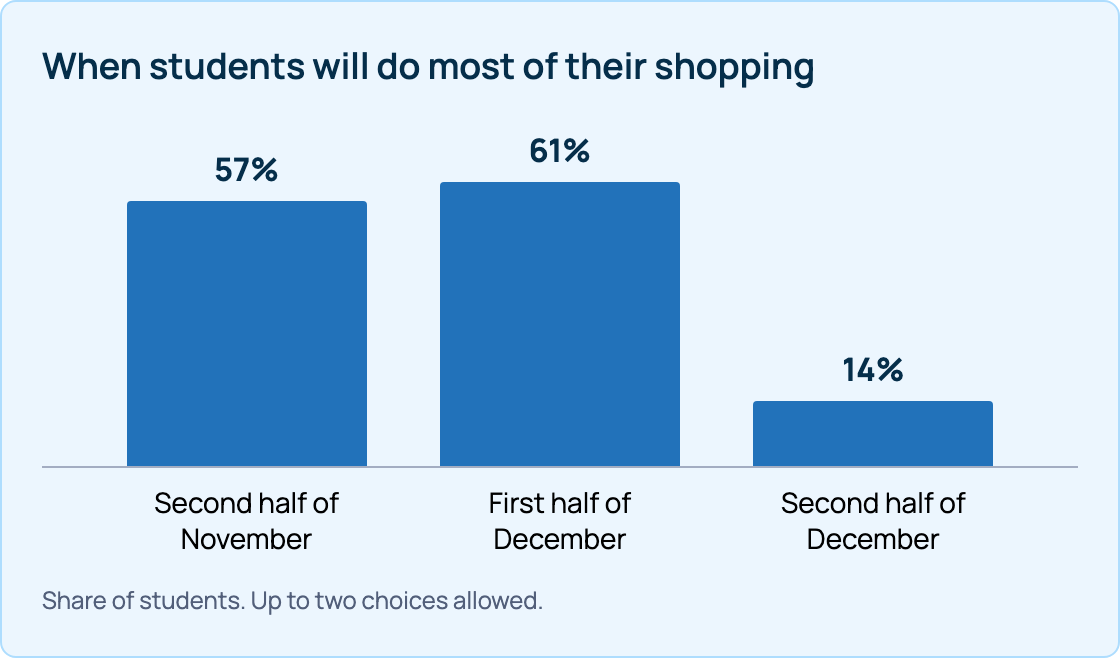
The late-December drop lines up with the academic calendar. By then, many students have left campus for winter break.
That makes two stretches especially valuable: the weeks leading into Thanksgiving and the run-up to finals. Students are on campus and actively shopping during both. For brands planning holiday college marketing campaigns, early November through early December is the window to show up.
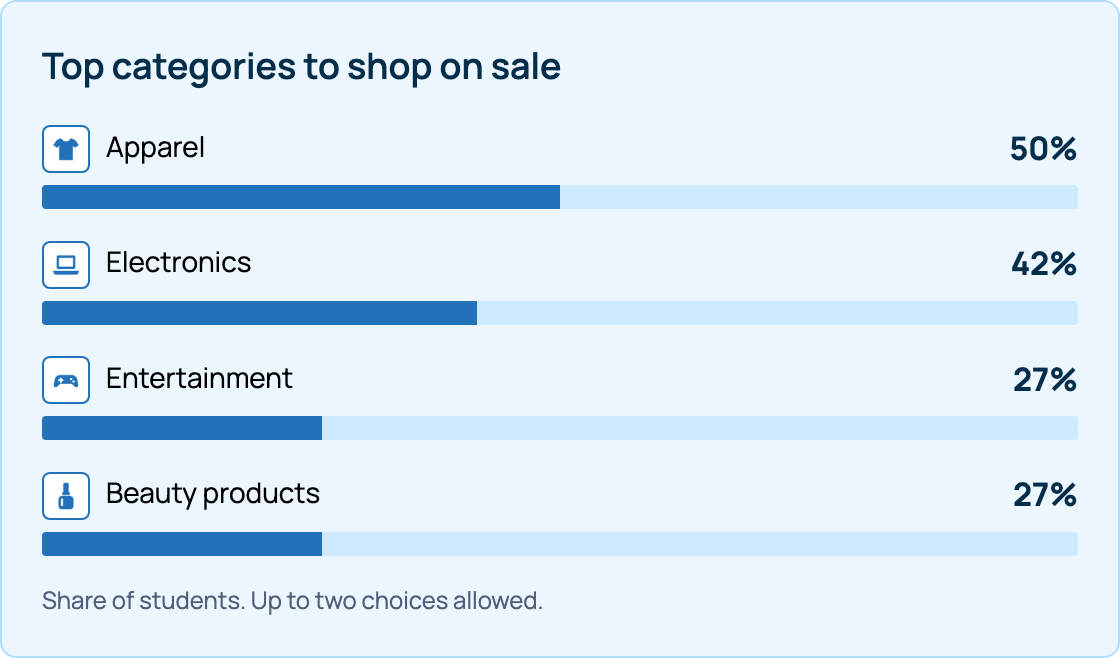
79% of college students say holiday sales like Black Friday and Cyber Monday are strong motivators to buy. Apparel and electronics lead the categories students are most excited to shop during sales.
College students favor large retailers, especially online. 74% plan to do most of their gift shopping online at stores like Amazon, Target and Walmart, and 55% in person at large retailers.
About a quarter plan to shop small. 26% will shop online through Etsy and boutiques, and 25% locally at shops and craft fairs.
Where students buy and where they first hear about a product aren't always the same place. A student who sees a brand on campus can still check out on Amazon, which means awareness built during the school day can carry through to an online purchase.
Most students plan to buy holiday gifts for parents (77%), siblings (67%) and friends (62%). But students aren't only shopping for others. Nearly half (47%) also plan to buy something for themselves. That self-purchase is where students try new products for personal use, and where a new brand can work its way into their routine.
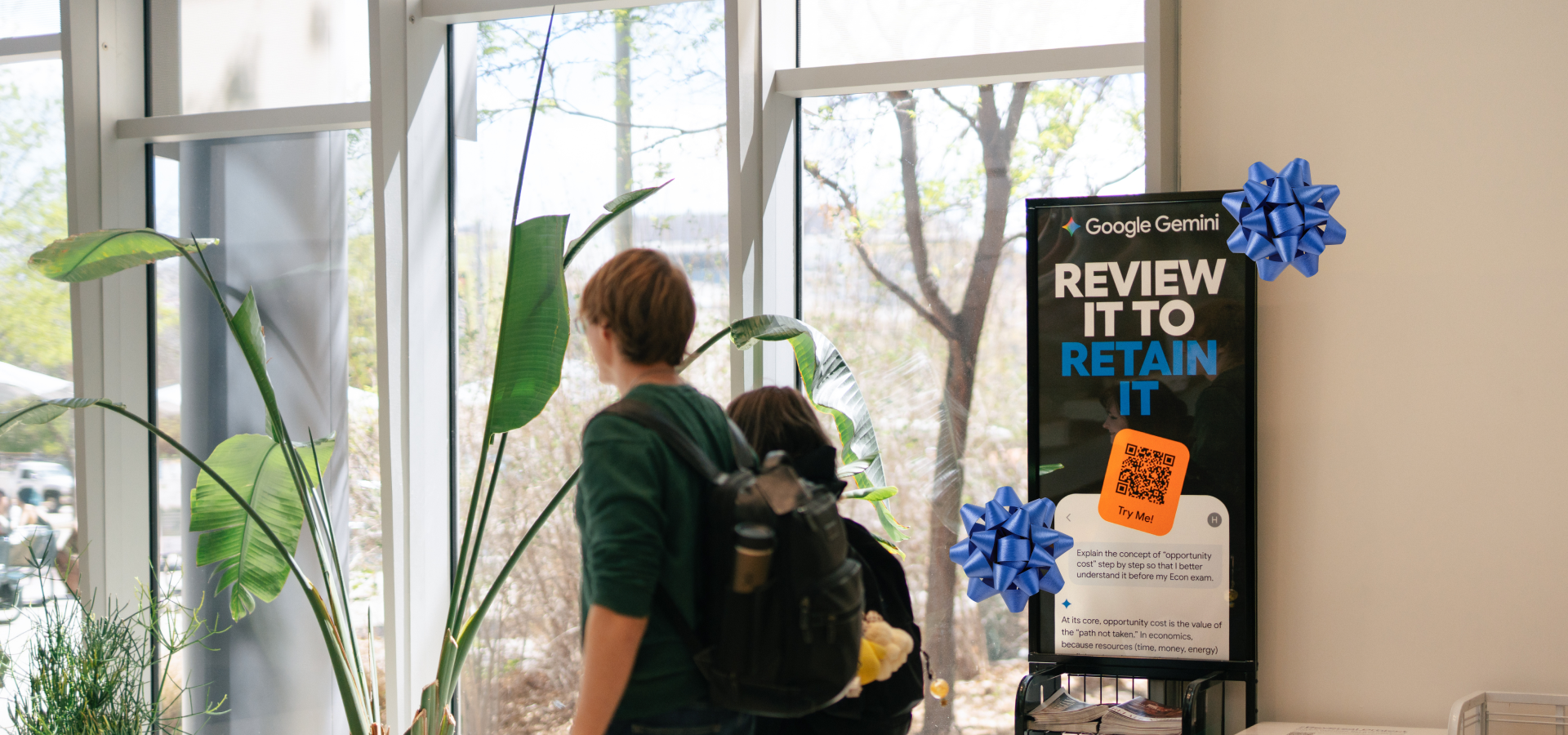
Students are on campus for both peak shopping windows: the weeks before Thanksgiving break and the stretch before finals. That timing is what gives advertising on college campuses an edge this season.
Two more findings make the case:
College campus advertising puts a brand in front of students where they live, study and spend their day, during the same weeks they're making holiday purchase decisions.
The full report also covers how students choose devices, which brands they stay loyal to and how they feel about AI. To get the deck or talk through what it means for your brand, contact flytedesk.
Methodology: flytedesk College Student Survey, October 2026. Base: 1,613 respondents across 121 campuses and 38 states, weighted. Questions about timing, shopping location and sale categories allowed up to two answers, and gift recipients allowed all that apply, so totals exceed 100%.

On this page
Headings